New Orleans murals tell stories fast. This private street art and mural walk also acts like a short tour of Treme’s culture, faith, music, and everyday history. I like how it mixes street level art energy with meaningful stops, so you’re not just walking for photos—you’re learning what shaped the neighborhood.
Two things I especially liked are the private local guide touch and the photo help. Having Hollis on the route meant I could ask questions, get quick guidance on what to photograph, and also get practical ideas for where to eat and what to do next. One thing to keep in mind: this experience requires good weather, and the tour is non refundable if you cancel.
In This Review
- Key things to know before you go
- Why This Street Art and Mural Walk Feels Local
- Price and Value: $20 with Admission Included
- Getting Started at 1137 Esplanade Ave
- Stop 1—The Circle Food Market: Food, Tragedy, and Renewal
- Stop 2—Charbonnet-Labat-Glapion Funeral Home: Stories in Stone
- Stop 3—Kermit’s Tremé Mother-in-Law Lounge: Jazz, Weekly Bands, and Lessons
- Stop 4—St. Augustine Church: Faith Roots in Treme
- Photo Help That Actually Makes a Difference
- Tour Timing, Pace, and What You Should Expect
- Who This Tour Fits Best (and Who Might Want a Different Option)
- Should You Book This Nola Mural Walk?
- FAQ
- How long is the Nola Culture Street Art & Mural Walk Tour?
- How much does the tour cost?
- Is the tour private?
- Where does the tour start?
- What language is the tour offered in?
- Are admission tickets included for the stops?
- What happens if the weather is poor?
- Is the tour refundable if I cancel?
Key things to know before you go

- Circle Food Market: A stop focused on food roots, local growing, and the neighborhood’s losses and renewal
- Charbonnet-Labat-Glapion Funeral: One of the city’s oldest funeral homes, tied to well known figures and political life
- Kermit’s Tremé Mother-in-Law Lounge: Music culture at a spot associated with weekly jazz bands and community storytelling
- St. Augustine Church: A look at deep religious roots in Treme
- Hollis-style local attention: You get personal conversation, plus help taking great photos
- 4 short stops in 1 hour 20 minutes: Each stop runs about 20 minutes, with admission tickets included
Why This Street Art and Mural Walk Feels Local
This tour works because it takes you off the usual sightseeing loop without turning it into a sketchy detour. You’re in New Orleans, but you’re spending your time where the neighborhood’s character actually lives—streets, corners, and institutions that people in the area know.
The street art and mural angle matters too, because it’s another way of reading the city. Even when the stops are indoors, you’re still thinking like a local: art on the wall, music in the air, and community stories carried in very specific places.
And because it’s private, you’re not forced to follow a pace that matches a big crowd. It’s just your group, with room to ask questions and stop for pictures when something grabs your eye.
You can also read our reviews of more tours and experiences in New Orleans.



Price and Value: $20 with Admission Included
At $20 per person for about 1 hour 20 minutes, the price is pretty straightforward. You’re paying for a guided walk plus organized entry to four set locations, and you don’t have to figure out tickets on the fly.
Each of the four stops includes an admission ticket. That’s a big part of the value equation here. Instead of spending your budget on extra entrances later, the tour bundles the costs into the experience, which makes planning easier.
Also, you get a mobile ticket, so you can keep things simple on your phone. For a short tour, that matters—less fumbling, more time looking at what’s in front of you.
Getting Started at 1137 Esplanade Ave
You’ll meet at 1137 Esplanade Ave, New Orleans, LA 70116, and the tour ends back at the same point. That return matters if you’re planning dinner nearby or trying to line up your next stop with a ride.
The starting area is described as near public transportation, which is useful if you’re not driving. And the tour is offered in English, so you won’t need to rely on translation apps to get the story.
This is also set up so most people can participate. Since it’s a walking tour with short timed stops, you should be ready to walk at a comfortable pace for the full duration.
Stop 1—The Circle Food Market: Food, Tragedy, and Renewal

The first stop is The Circle Food Market, and it’s a smart opener. You begin with food and everyday life, which helps you understand the neighborhood before you jump into the more dramatic institutions later.
This market is framed as a place that once supported local grown food, then faced tragedies, then went through renovations as the city kept changing. Even without getting lost in dates, you learn how New Orleans neighborhoods don’t just move forward in a straight line. They rebuild, they remember, and they reshape what used to be there.
What you’ll likely enjoy most here is the mix of practical and emotional context. Food is universal, so it’s an easy entry point. Then you can see how the rest of the tour reflects community needs in different forms.
Possible consideration: because it’s focused on history and transformation, it may feel more like a story stop than a photo stop. If you want lots of wall art right away, keep expectations flexible and let the guide steer you to what’s worth photographing in the moment.
Stop 2—Charbonnet-Labat-Glapion Funeral Home: Stories in Stone
Next comes Charbonnet-Labat-Glapion Funeral, one of the city’s oldest funeral homes. It’s not the kind of place many visitors plan to see first, which is exactly why this stop stands out as a learning experience.
Here’s the big idea: funeral homes in New Orleans aren’t only service providers. They’re part of the social map. This one is described as having served politicians and celebrities, along with everyone in between. That wide range gives you a sense of how the city connects public life with private community rituals.
For your visit, think of it like a guided lesson on New Orleans culture through a single institution. You’ll get details that help you understand why people show respect in certain ways, and why formal spaces like this can be both historic and personal.
Photo tip: respect the mood of the place. If the interior feels quiet, don’t rush to shoot. Ask the guide what’s best and when, since the goal is to capture meaningful impressions without disrupting a space built for solemn moments.
Possible drawback: if you’re not in the mood for heavier subject matter early on, this stop may feel intense. Still, it’s one of the most important places on the route for understanding how Treme connects to the wider city.
Stop 3—Kermit’s Tremé Mother-in-Law Lounge: Jazz, Weekly Bands, and Lessons

Then you get a tonal shift at Kermit’s Tremé Mother-in-Law Lounge. This is a culture stop where music is not just entertainment—it’s a way of preserving the neighborhood’s past.
The tour frames it as where Tremé musical and cultural history collide, connected to Kermit Ruffin. The idea is that weekly jazz bands bring the community story back to life, with lessons built right into the ongoing rhythm of the place.
If you love music scenes, this stop is a treat because it gives you context. You’re not only hearing about jazz. You’re seeing how a venue functions as a living classroom for local identity.
What I’d suggest you do here: listen to what your guide emphasizes. The same lounge could be explained in a dozen ways, but in a guided stop, the most helpful part is the part that ties music to place.
Possible consideration: because it’s connected to weekly music programming, your exact experience can depend on timing and what’s scheduled. The tour is planned around a visit, but music vibes are always best when the timing lines up.
Stop 4—St. Augustine Church: Faith Roots in Treme
The final stop is St. Augustine Church, focused on the deep roots of religion in the Treme area. This is a good bookend after the funeral home and the jazz lounge, because it keeps the theme of how community values get expressed through real, specific spaces.
Religious institutions in New Orleans are often key to how neighborhoods organize themselves. In this case, the tour positions the church as part of why Treme has endured and why traditions matter.
For you, this stop can be one of the most grounding moments on the walk. It’s quieter than the market and more reflective than the lounge, and it helps you connect the cultural threads you’ve heard so far.
Photo tip: use the same common sense you would anywhere sacred. Keep your phone low when people are paying attention. If there’s an opportunity to take a respectful photo from a distance, take it, then move on. The tour’s short segments mean you don’t want to get stuck.
Possible drawback: if you’re hoping for street art intensity at every stop, this one may feel more “story and meaning” than “visual spectacle.” But that’s also why the overall tour works—it doesn’t reduce the neighborhood to just walls.
Photo Help That Actually Makes a Difference
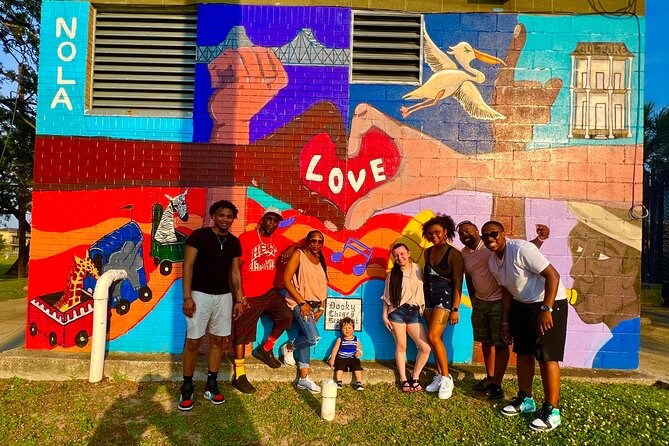
The tour explicitly includes assistance with taking great photos, and that’s one of the strongest practical perks. Not everyone knows how to frame in a city with changing light, narrow streets, and historic buildings.
With Hollis, the approach is part technical and part situational. You get advice on what to include, when to move a step, and how to make pictures look intentional rather than random. I especially like that the photo guidance doesn’t feel like a scripted photo shoot. It stays connected to what you’re learning.
Here are a few ways you can make the most of the photo help without needing fancy gear:
- Ask for a quick framing suggestion before you shoot, not after
- Take one steady photo, then ask where a second angle would add meaning
- If something is inside a location, confirm what’s allowed before photographing
One more practical bonus: Hollis also shared ideas for where to eat and what to do next, based on the vibe of the areas you visited. That kind of follow up makes a short tour feel longer and more useful.
Tour Timing, Pace, and What You Should Expect
The schedule runs about 1 hour 20 minutes total, with each of the four stops lasting about 20 minutes. That structure keeps the tour from dragging. You get enough time at each place to absorb the story, but you’re not stuck for hours in one location.
Because it’s private, the pace tends to stay flexible for your group. You can likely slow down if you’re interested in a detail, or speed up if your group is ready to move. That’s a real benefit compared to larger group walks where you have to pretend you’re not curious.
It’s also offered in English, and you’ll receive confirmation at booking time. If you like knowing the basic plan ahead of arrival, that reduces stress.
Possible drawback: because it’s time boxed, you should be ready to let the guide steer. If you’re the type who wants to wander for an extra 30 minutes at a single stop, you may feel slightly rushed.
Who This Tour Fits Best (and Who Might Want a Different Option)
This tour is a strong pick if you want New Orleans culture beyond the big postcard route. If you enjoy seeing how neighborhoods work—through food roots, funeral traditions, music venues, and churches—this fits your style.
It’s also ideal if you care about photography but don’t want to guess. The built in photo assistance plus local guidance can help you take home images that match the meaning of what you saw.
Where it might be less ideal is if your main goal is pure street art hunting with lots of visible murals at every corner. The stops are culturally focused, and the street art component is more of a framework than a stop-by-stop mural catalog based on the details provided.
If you’re traveling with limited time and want a guided, well paced sampler of Treme, you’ll appreciate the structure. Four stops in about 80 minutes is a practical way to pack meaning into a short window.
Should You Book This Nola Mural Walk?
I’d book this if you want a private culture walk that goes beyond the typical New Orleans checklist. The combination of short visits, admission tickets included, and Hollis-style local attention makes the $20 price feel fair instead of random.
Also, it’s highly rated, with an overall rating of 4.9 and 46 ratings, plus about 98% recommending it. That kind of consistency is a good signal for a short tour where the details matter.
One final check before you book: watch the weather. This experience requires good weather, and it’s non refundable if you cancel. If your plans are flexible and you’re okay letting the guide’s cultural focus lead, this is a smart, value packed way to experience Treme in a single stretch.
FAQ
How long is the Nola Culture Street Art & Mural Walk Tour?
It runs for about 1 hour 20 minutes.
How much does the tour cost?
The price is $20.00 per person.
Is the tour private?
Yes. It’s a private tour/activity, and only your group will participate.
Where does the tour start?
The meeting point is 1137 Esplanade Ave, New Orleans, LA 70116, USA. The tour ends back at the meeting point.
What language is the tour offered in?
The tour is offered in English.
Are admission tickets included for the stops?
Yes. Admission tickets are included for each of the four stops listed.
What happens if the weather is poor?
The experience requires good weather. If it’s canceled due to poor weather, you’ll be offered a different date or a full refund.
Is the tour refundable if I cancel?
No. This experience is non refundable and cannot be changed for any reason.