REVIEW · TEL AVIV
Tel Aviv Street Art Tour
Book on Viator →Operated by Tourist Israel · Bookable on Viator
Street art has politics in plain sight. This 2-hour shared walk through South Tel Aviv is built around reading the messages behind murals and graffiti, not just snapping photos. I like how the guide connects each artwork to the city’s social and political layers, and I also like the chance to meet local street artists and buy directly from makers. The only real drawback: with a group capped at 25, you’ll move together as a pack, so don’t expect long solo wandering.
Florentine is the heart of this tour. Expect to weave through streets where the art feels close to daily life, with protest themes and subcultures showing up in unexpected corners. In sessions led by guides like Shir, the tone is friendly and energetic, and you end up looking at the walls with different eyes.
You start and finish at the same place, and the tour is designed to be easy to plug into an afternoon. With a mobile ticket and a meeting near public transport, it’s a low-friction way to understand Tel Aviv beyond the postcard version—just wear comfy shoes.
In This Review
- Key highlights to look for
- Why Florentine’s street art feels personal in South Tel Aviv
- The 2-hour walk: what you’ll do from Poli House to return
- Florentine stop: murals, tags, and the stories behind the walls
- Why a guide matters more than a photo spot
- Meet local street artists and buy artwork directly
- Price and value: is $60 reasonable for 2 hours?
- Who should book this Tel Aviv street art tour
- Should you book the Tel Aviv Street Art Tour?
- FAQ
- How long is the Tel Aviv street art tour?
- Where do I meet, and where does the tour end?
- What area of Tel Aviv will we explore?
- What’s the group size limit?
- Do I need a paper ticket?
- What is the free cancellation deadline?
Key highlights to look for
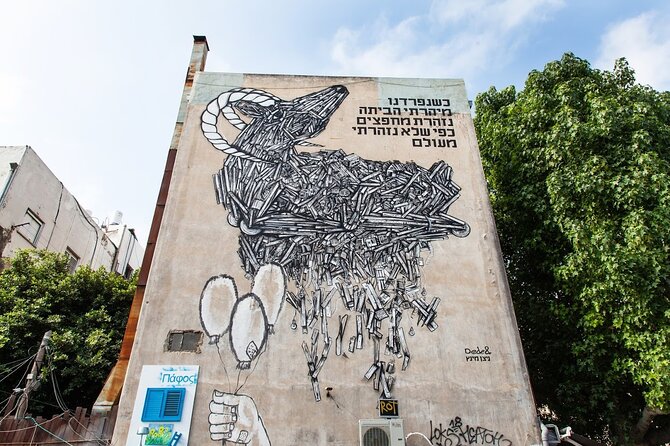
- Florentine-focused storytelling: you’ll connect murals and tags to real social and political meaning
- Guide-led context: the tour explains the history and subcultures behind what you’re seeing
- Art purchases from local makers: you may have an opportunity to buy pieces directly from artists
- Small-ish group energy: capped at 25, so there’s room for questions
- Street-artist connections: tours partner with local artists, with an option to connect via social media
Why Florentine’s street art feels personal in South Tel Aviv
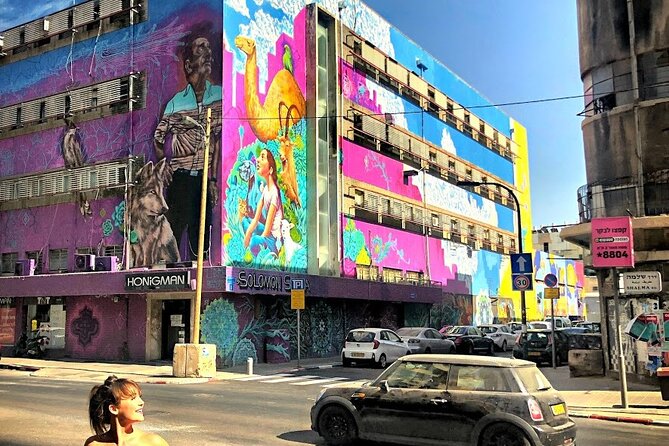
South Tel Aviv isn’t treated here like a museum. It’s treated like a living conversation. The tour stays in the Florentine area and uses the walls as a starting point for bigger questions: who gets heard, what gets censored, and how neighborhoods talk back when mainstream media doesn’t.
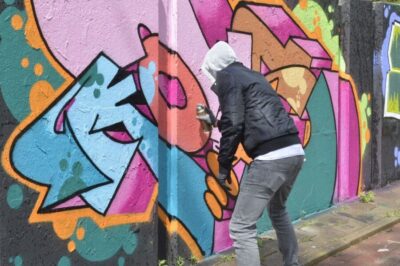
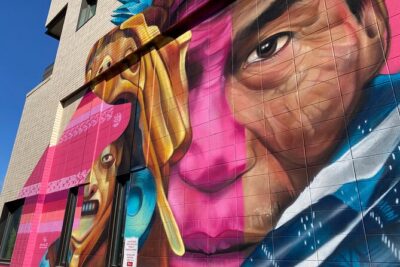
Florentine is especially good for this kind of walk because the art blends into the street rhythm. You’re not just viewing a single mural from a distance—you’re moving through a patchwork of styles, from graffiti and tags to larger open-air installations. The guide ties it together by explaining the social and political undertones behind many pieces, including the “protest” themes that show up across the neighborhood.
One thing I really like about this approach is that it changes how you look at street art once you’re off the tour. Instead of thinking of graffiti only as decoration or vandalism, you start noticing patterns: recurring symbols, repeated themes, and the way different artists use the same public space to argue for identity, rights, or memory.
If you’re the type who wants to understand the “why” behind what you’re seeing, this tour fits. And if you’re not normally into street art, it still works because the guide translates the language of the walls into normal human context—daily life, power, and community stories.
You can also read our reviews of more tours and experiences in Tel Aviv.



The 2-hour walk: what you’ll do from Poli House to return
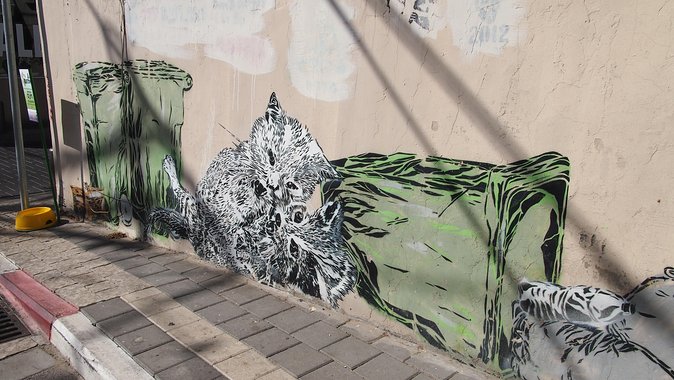
This is built as a short, shared neighborhood outing—about 2 hours—so you can fit it into a travel day without the whole afternoon disappearing. The start time is 3:00 pm, and the tour ends back at the meeting point, so you’re not left figuring out a new location after you’re done.
Your meeting spot is at Poli House Tel Aviv Hotel by AFI Hotels, on Nahalat Binyamin St 1 (Tel Aviv-Yafo). It’s described as near public transportation, which matters in Tel Aviv, where hopping between areas is easy but waiting around isn’t fun.
Because this is a walking tour, you’ll get the best experience if you’re ready to move at a steady pace. The group is capped at 25 travelers, so it’s not a one-on-one chat, but it also shouldn’t feel chaotic. You’ll still be able to ask questions and get pointed explanations on the go.
One small practical tip: bring your camera, but also let your eyes do part of the work. Street art is often easiest to understand up close, where you can see layering, edits, and how the artist built meaning into the piece. If you spend the whole tour only photographing, you can miss the guide’s cues about what to look for.
Also remember this is a shared tour. You’ll likely meet other people who booked the same time slot, and part of the value is the group discussion vibe. It’s informal, but it’s not random—you’re walking with a plan.
Florentine stop: murals, tags, and the stories behind the walls
Most of the tour’s “time on the ground” is in Florentine. That makes it more focused than the typical quick-see style tour where you rush past too much. Instead, you get enough time in one zone to notice how the art connects to place.
Here’s what the guide helps you do during the walk:
- Spot subcultures: you’ll learn how artistic styles can map onto community identity, not just aesthetics
- Track political undertones: many pieces are explained in terms of public debate and protest energy
- Understand the city’s artistic culture: Tel Aviv’s street art is treated as a creative ecosystem, not isolated incidents
- Read installations as storytelling: you’ll be guided through how certain works communicate ideas through imagery and layout
This is where guides really matter. In one example, a guide named Shir was described as fun and enthusiastic, and the big payoff was a shift in perspective—street art started to feel like a form of commentary rather than random graffiti. Another guide, Guy, was praised for being personable and clearly passionate about the subject, with explanations that brought context without turning the walk into a lecture.
You don’t need to be an expert to benefit. What you need is curiosity and a willingness to ask basic questions like: What is this piece reacting to? Who is it speaking to? And why this symbol, in this neighborhood, on this wall?
A fair consideration: because the tour is only about two hours, you won’t cover every single piece in Florentine. You’ll cover what your guide can explain well in a limited time. The tradeoff is worth it if you care about meaning. If you just want to wander freely, you might prefer a self-guided street-art walk—though you’d miss the context that makes the art click.
Why a guide matters more than a photo spot
It’s tempting to treat street art like a scavenger hunt: find mural, snap photo, move on. This tour is different because the guide gives you a framework. When you know what themes to look for—identity, protest, memory, everyday life—the neighborhood becomes easier to read.
This is also why it’s helpful that the tour collaborates with local street artists. The guide isn’t just translating art into words; they’re pointing you toward how the artwork lives inside the local scene. That’s one reason the experience is described as giving meaningful insight into history and subcultures in the Israeli capital. The walls become part of the broader city story.
And there’s a social side too. This is a shared tour capped at 25, so you’re not doing it alone. That means you can hear how other people react to certain pieces. Sometimes one person asks the question you were thinking, and suddenly the explanation lands even better.
Another plus: the tour’s structure helps you move beyond surface-level impressions. You get a guided route that builds in order, so explanations come right when you see the artwork. That timing matters. Street art can be easy to misread if you view it only for color and style.
If you love urban art, you’ll likely enjoy the way this tour nudges you to look for details—symbols, tone shifts, and how a piece fits into its street setting. If you’re skeptical about graffiti, you might still appreciate the guide’s balanced approach to why this art shows up and what it’s trying to communicate.
Meet local street artists and buy artwork directly
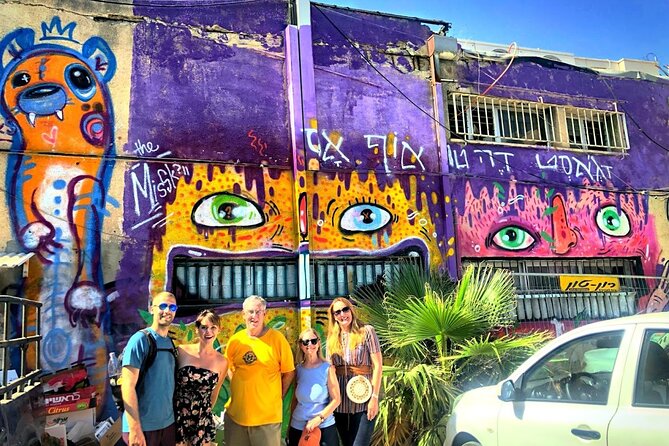
One of the most practical advantages of this tour is that it doesn’t only talk. It connects you to people. The tour works with local street artists, and it’s set up to give visitors a chance to connect with artists through social media and, importantly, purchase art pieces directly from the makers.
That changes the value calculation. If you only want photos, you can get those anywhere. But if you want to take something real home—something with a local connection—then the chance to buy directly from an artist matters.
A few things to keep in mind if you’re thinking about purchasing:
- You’ll want to be ready to decide on the spot, since this is a short tour.
- Ask questions about the work. Even a couple of clarifying questions can turn a purchase into a story you’ll remember.
- Don’t treat it like a hard sell. The idea here is collaboration and direct connection, not just a marketplace stop.
Also, even if you don’t buy anything, the artist connection can deepen your understanding. Learning that street art is made by real people with a real voice shifts how the neighborhood art feels.
This is one of the experiences where the “souvenir” can be meaningful in a way typical tourist shops rarely manage. If you like supporting artists you meet face-to-face, this part is worth paying attention to.

Price and value: is $60 reasonable for 2 hours?
At $60 per person for about 2 hours, this isn’t a cheap activity. But it also isn’t priced like a big-ticket museum tour. The key question is what you get for that money—and the answer here is context plus access.
You pay for:
- A guide who explains the social and political meaning behind open-air works
- A focused neighborhood walk (Florentine) rather than a vague “see street art” plan
- A small group setup (maximum 25), which makes questions realistic
- Collaboration with local street artists, including the possibility of buying directly from makers
If you’ve ever done a self-guided street-art walk, you know the difference between seeing and understanding. This tour is essentially paying for translation—how to read the walls, not just how to photograph them.
Also, the popularity suggests demand for this exact kind of experience. It’s typically booked about 42 days in advance on average, which is a polite hint: if you want a specific date, don’t wait until the last week.
A fair consideration: you’re paying for guided time, not for long hours of unlimited exploration. If your travel style is very freeform and you hate structured itineraries, you might find two hours feels short. But if you want the fast track to meaning—especially in a neighborhood you might not know well—this is good value.
Who should book this Tel Aviv street art tour
This is a strong match if you:
- Want street art explained in plain terms, with history and subculture context
- Enjoy neighborhood walks and prefer local insight to generic sightseeing
- Like the idea of meeting local artists and possibly supporting them by buying work
- Want an easy-to-fit activity starting at 3:00 pm, with a return to the meeting point
It’s also a good option if you’re traveling with others who don’t all think the same way. Street art tends to spark opinions. The guide helps you turn those opinions into understanding instead of arguments.
One group to be cautious about: if you’re hoping for a very quiet, slow stroll where you can stop for extended periods at every wall, a shared group format may not be your ideal fit. Two hours passes fast, and the tour is designed as a route with multiple stops in one area.
If you’re comfortable walking for around two hours and you like asking questions, you’ll likely enjoy this. If your goal is only to “collect photos,” consider whether the explanation part is worth paying for.
Should you book the Tel Aviv Street Art Tour?
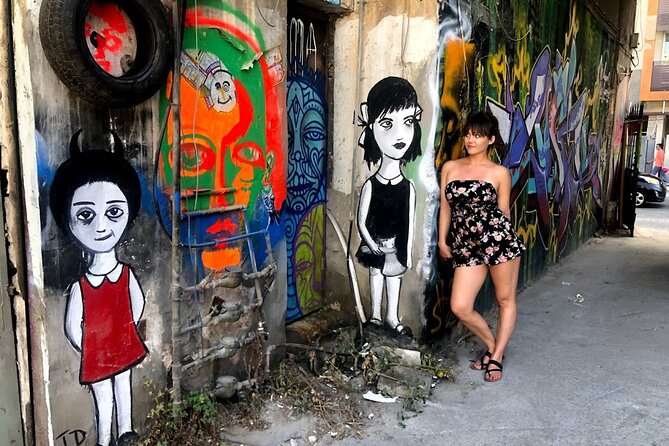
If you want Tel Aviv street art with meaning—not just images—then yes, it’s an easy recommendation. The best part isn’t any single artwork. It’s the way the guide helps you connect pieces to social and political ideas, then ties that context to the local artists behind the work.
I’d book it if you’re in the Florentine/South Tel Aviv zone anyway, and you’d like a guided route that’s short, focused, and conversation-friendly. And if you’re interested in buying art directly from makers, the tour is one of the most practical ways to do that within a couple of hours.
Skip it only if you strongly prefer self-guided wandering with no structure, or if you know you won’t want the discussion and context. For the rest of us—curious walkers, art readers, and people who like to understand a place through its voices—this one is a solid use of time.
FAQ
How long is the Tel Aviv street art tour?
It lasts about 2 hours.
Where do I meet, and where does the tour end?
You meet at Poli House Tel Aviv Hotel by AFI Hotels on Nahalat Binyamin St 1 in Tel Aviv-Yafo, and the tour ends back at the same meeting point.
What area of Tel Aviv will we explore?
The tour focuses on South Tel Aviv, with the main stop in the Florentine neighborhood.
What’s the group size limit?
The tour has a maximum of 25 travelers.
Do I need a paper ticket?
No. The experience uses a mobile ticket.
What is the free cancellation deadline?
You can cancel for a full refund up to 24 hours before the experience starts. If you cancel less than 24 hours in advance, the payment isn’t refunded.