REVIEW · MALLORCA
Palma Street Art Tour
Book on GetYourGuide →Operated by Opcion Events GmbH · Bookable on GetYourGuide
Palma’s walls tell better stories than museums. This guided Palma Street Art Tour turns the old town into an open-air gallery, then swings over to Santa Catalina.
You get to watch the city’s art unfold in real time, right in the alleyways where it lives.
I really like the story behind each piece—how the guide explains what you’re looking at and why it matters. I also like that you can get lucky and meet an artist; one guest even reported chatting with a street artist and visiting their atelier.
The main thing to keep in mind is timing drift. It’s sold as a 2-hour tour, but some experiences have run closer to 3 hours, and at least one person had to leave after about 4.5 hours.
In This Review
- Key takeaways
- Starting at ALASKA: your street-art launch point
- Old Town Palma: seeing familiar buildings with new eyes
- Tanners’ Quarter: narrow alleys and hidden courtyard surprises
- Santa Catalina: the creative edge of Palma
- Over 30 works: what the guide helps you notice
- Pace and timing: plan around a longer walk than advertised
- Price and value: is $62 a good deal for street art?
- Who this Palma street art tour suits (and who might want another option)
- Should you book the Palma Street Art Tour?
- FAQ
- Where is the meeting point for the tour?
- How long is the Palma street art tour?
- What language is the tour guide speaking?
- Is food or drinks included?
- Is the tour wheelchair accessible, and can I bring luggage?
- How much street art will we see?
Key takeaways
- Meet at ALASKA (Hamburgueseria Alaska) kiosk: Easy starting point on the edge of the square.
- 30+ street art pieces: You’ll see a lot, not just a couple of “big murals.”
- Old town + Tanners’ Quarter: Narrow alleys, hidden courtyards, and colorful facades.
- Santa Catalina stop: A former fishermen’s quarter that’s now a young, creative pocket of Palma.
- Technique + meaning, not just sightseeing: You learn how works are made and what street art represents.
- Some tours include real artist contact: If you’re lucky, you may meet a creator and talk with them.
Starting at ALASKA: your street-art launch point
Meet at the ALASKA kiosk at Hamburgueseria Alaska, positioned on the edge of the square. That matters more than you’d think: with street art, the best finds are often tucked into side streets, so you want to start oriented and moving right away.
The tour is guided in English and German, so plan on hearing the explanations clearly as you walk. Also note the practical rule: no luggage or large bags. If you’re traveling light, great; if you’re carrying a big daypack, keep it manageable.
Old Town Palma: seeing familiar buildings with new eyes
Your walk begins in Palma’s historic old town, where traditional architecture sits next to contemporary works. That contrast is the point. Street art isn’t separate from daily life here—it’s part of how people read the city now.
Expect a “new eyes” approach as you move through the older streets. The guide frames street art as more than graffiti: it’s a way for a generation to talk back, reflect society, and create visual moments you can’t get from a gallery wall.
This is the part where the tour pays off for first-timers. If you usually pass murals without thinking, the guide’s context helps you slow down and actually look.
Tanners’ Quarter: narrow alleys and hidden courtyard surprises
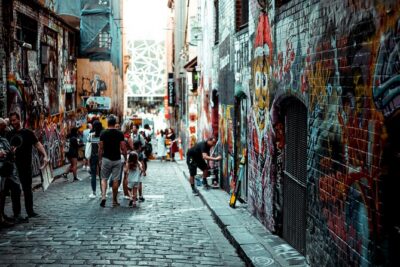
The Tanners’ Quarter (often called a true paradise for street art fans) is where the tour turns from sightseeing into a scavenger hunt. You’ll be walking narrow alleyways, spotting art on colorful facades, and moving through areas with hidden courtyards.
Why this neighborhood works so well on foot: street art here isn’t “single-piece tourism.” It’s layered into the street geometry—corners, doorways, small passageways, and semi-private spaces. You’ll feel like the city is offering new angles constantly.
One practical tip: keep your phone camera ready, but don’t only shoot. The most interesting “aha” moments are often the guide pointing out technique choices—how an artist uses placement, scale, or style to change how you read the building.
Santa Catalina: the creative edge of Palma
After the old town maze, you move to Santa Catalina, a district that used to be a fishermen’s quarter and has grown into a trendy, young creative area. Expect more of that “street scene” energy—walk-and-look, with the art blending into a neighborhood feel.
This stop is valuable because it shows street art as a living part of the community, not a museum exhibit. In other words, it helps you understand why Palma has developed into an important European street art center in recent years, with open-minded locals who treat public art as something welcome.
If you’re planning a day in Palma afterward, Santa Catalina is also a handy area to know. Even without a formal food stop on the tour, it’s a good place to head for a drink or snack once you’re done.
Over 30 works: what the guide helps you notice
You’ll see more than 30 street art pieces during the walk, and you’ll get explanations tied to each work. That’s the difference between “I took photos” and “I learned how to look.”
Here’s what the guide focuses on:
- Creation stories: how the work came together and what the artist wanted to say.
- Techniques: what tools or methods can create a certain look (and why the style fits the wall).
- Significance for the city: how street art reflects society and shapes local identity.
One of the best parts is that you don’t just get descriptions—you get prompts. The tour encourages you to treat each piece like a message, not random decoration. That approach tends to make the whole city feel more legible afterward.
And yes, there’s a small chance you’ll meet an artist in person. One guest was lucky enough to meet a creator and even visit their atelier. You shouldn’t book the tour expecting that every time, but it’s an added reason to keep your attention on the street and not just your route.
Pace and timing: plan around a longer walk than advertised
The tour is listed as 2 hours, and that’s what you should plan for. Still, you need a realistic buffer.
One verified experience said it ran closer to 3 hours. Another reported about 4.5 hours, with frequent comments about needing to eat or drink—until they had to set firmer boundaries and leave for their plans.
So here’s my practical advice: treat the 2-hour label as a baseline, not a guarantee. If you have dinner, museum tickets, or a hard meeting time afterward, give yourself extra slack.
Also, since food and drinks aren’t included, don’t assume you’ll be fine on willpower. If you’re easily distracted by hunger, grab a snack or water before you start, or plan to stop nearby once the tour ends.
Price and value: is $62 a good deal for street art?
At $62 per person for a guided walk that typically covers 30+ works, the value comes from the density and the explanations. This isn’t a “one mural per neighborhood” style tour. You’re getting multiple stops with context, which makes the experience feel more like learning than wandering.
The included portion is straightforward: you pay for the guided tour of the most interesting, significant, and curious works of street art in Palma. Everything else—food, drinks—is on your own time.
Is it worth it? If you like street art beyond surface visuals—if you care about technique, meaning, and why these works show up where they do—then yes. The more time you spend looking with guidance, the more that $62 turns into “real understanding,” not just sightseeing.
If you’re only chasing quick photos and already know a lot about street art styles, you might feel the need for more “free time” built in. But for most people, the guided pacing is the point.
Who this Palma street art tour suits (and who might want another option)
This tour is a strong fit if:
- you enjoy walking and don’t mind narrow streets and alley corners
- you want context for street art (technique and significance)
- you like seeing the city as an “open-air museum,” not a list of landmarks
- you’re curious about Palma’s role in the European street art scene
It may be less ideal if:
- you have a very strict schedule right after the start window
- you expect guaranteed artist contact (it’s possible, not promised)
- you need long breaks for food and drinks during the walk, since none are included
Also, if you’re bringing kids, check comfort levels with the pacing and the fact that there’s no planned stop for snacks on the tour. The data here doesn’t mention kid-specific handling, so you’ll want to be thoughtful about timing and energy.
Should you book the Palma Street Art Tour?
If you like your travel with a creative angle, I’d book this. It’s a focused way to see Palma through the lens of public art—old town first, then Santa Catalina—while getting explanations that help you look smarter at what you’re seeing.
Just do one thing to make it smooth: plan your afternoon with buffer time. Even though it’s advertised as 2 hours, real-world pacing can run longer. And since food and drinks aren’t included, start hydrated and fed enough that you can stay present for the street art stories.
If you want Palma not just photographed, but understood, this tour is a solid pick.
FAQ
Where is the meeting point for the tour?
You meet at the ALASKA kiosk (Hamburgueseria Alaska), on the edge of the square.
How long is the Palma street art tour?
The tour is scheduled for 2 hours.
What language is the tour guide speaking?
The live guide offers English and German.
Is food or drinks included?
No. Food and drinks are not included.
Is the tour wheelchair accessible, and can I bring luggage?
The tour is wheelchair accessible. Luggage or large bags are not allowed.
How much street art will we see?
The tour includes more than 30 street art pieces.