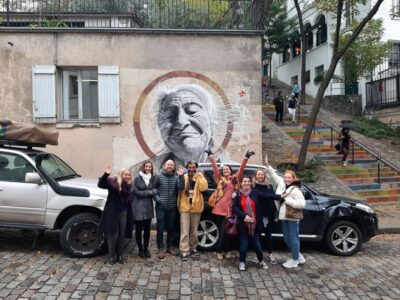
Murals with real reasons matter here. On this Kibera street art walk, artists from Sun Valley Art Collective like Saviour and Tony/Anthony explain what the paintings mean and how they fit daily life beyond stereotypes. I like that the tour is guided by people who grew up in the community, so you get context you can actually use.
What I love most is the hands-on access: you don’t just view walls, you meet the creators, visit a studio area, and learn how art connects to education and other community programs. A possible drawback is that this is a walking tour through the settlement and it is not suitable for wheelchair users or anyone who needs step-free, easy ground.
In This Review
- Key things to know before you go
- Entering Kibera through Sun Valley’s eyes
- What the 2-hour walk covers (and what you’ll notice)
- Stop-by-stop: Gateway Supermarket, the Kibera route, and the special 30-minute stop
- 1) The Kibera walk (about 2 hours)
- 2) The special 30-minute stop
- 3) Finishing near Olympic stage (by HOF Gallery Kibera)
- Street food and studio time: where the tour turns into support
- Street food samples on request
- Studio visit and making it real
- Buying art in Kibera: how to take home something meaningful
- Price and logistics: is $45 worth your time?
- Who should book this tour (and who should pass)
- Should you book Kibera Street Art with Local Artists?
- FAQ
- How long is the Nairobi Kibera Street Art Tour?
- Where do I meet for the tour?
- What languages does the guide speak?
- Is street food included?
- Can I buy art during the tour?
- Is this tour suitable for wheelchair users or people with mobility impairments?
Key things to know before you go
- You’ll meet artists from Sun Valley (including Saviour and Anthony/Tony in past tours) and hear their own perspectives
- Small-group feel: the guide-to-guest ratio is about 1 guide for every 2 guests
- You’ll see more than murals: collectives, studios, and artist spaces show how the art is made and shared
- Street food samples can be included on request, with stops timed during the walk
- Purchasing art is part of the experience, with chances to buy directly from local artists
- Respect matters: you’ll pass people going about daily life, and you’ll be told when it’s appropriate to take photos
Entering Kibera through Sun Valley’s eyes
A street art tour usually gives you photos and facts. This one gives you something harder to fake: the reason behind the paint. The experience is led by the Sun Valley Art Collective, an art group made up of around 15 local artists who grew up in Kibera. That changes the whole tone. You’re not getting a remote lecture about poverty or resilience. You’re getting lived interpretation—why certain murals exist, what they respond to, and how art becomes a tool for connection.
The guides you may meet include names like Saviour and Anthony/ Tony, who come across as true ambassadors rather than tour performers. They can explain the socio-political side of the work without turning it into a sad slideshow. And they also talk about the creative side: how they’re inspired, how they collaborate, and what it feels like to keep making art while life keeps moving.
This is also a tour about choosing your lens. If you think you already know Kibera from headlines or film scenes, you’ll likely feel your assumptions loosen. The murals, paintings, and community spaces show a place where creativity is organized and shared—not only reacted to.
What the 2-hour walk covers (and what you’ll notice)
The core of the tour is about 2 hours of guided walking through Kibera, starting after you meet at the established point and moving through streets where art is visible in everyday spaces. You’ll see educational murals and urban art spread throughout the area, and you’ll hear stories that connect the artwork to community life.
Here’s what tends to stand out as you walk:
- Murals explained in human terms
The guides focus on meaning: what the artwork is saying, who it’s for, and why that message matters inside Kibera.
- Art collectives and creative networks
You won’t just see one person’s work. You’ll encounter how groups organize creativity and share skills.
- Life around the art
Expect to pass people going about their day. This isn’t a closed set. So the tour experience has a real-world rhythm.
I also like that the pace is designed for conversation. With one guide for every two guests, it’s easier to ask questions without feeling like you’re shouting over a crowd. If you’re the type who wonders about technique, symbolism, or how artists support each other, this structure makes it doable.
Stop-by-stop: Gateway Supermarket, the Kibera route, and the special 30-minute stop
You’ll meet outside Gateway Supermarket on Kibera Station Road. The operator notes that this meeting location is very safe, and since there is no parking, it’s best to arrive by Uber/taxi or another ride-hail option. Do not treat this like a bus stop you can wander to at random—use the map pin or ask for the exact walking directions if needed.
From there, the tour route is built around a few different layers:
1) The Kibera walk (about 2 hours)
During this section, you’ll visit multiple mural sites and also move between art collectives, studios, and some artists’ houses. You’ll stop along the way and listen, then look again with new context. This is where the tour earns its value: the guide turns what you might view as “decorations” into communication.
One practical note: bring your camera, but be ready for the fact that the streets are active. You’ll be asked to be respectful, and you’ll be told when photos are appropriate.
2) The special 30-minute stop
After the main walking segment, there’s a 30-minute stop built into the tour. This is time set aside for a closer look at an additional creative space or point of interest—so it’s not just another mural photo op. Think of it as the part where you get a change of pace and a bit more behind-the-scenes context.
Even though you’ll still be in a neighborhood environment, the tour’s structure helps you keep your bearings and understand why that next stop matters.
3) Finishing near Olympic stage (by HOF Gallery Kibera)
The tour finishes at HOF Gallery Kibera, and the route is timed so you end up near Olympic stage, which makes it easier to grab a ride or continue onward. The operator specifically notes that calling an Uber/taxi or taking a matatu is practical from there.
This end-point matters. Some tours dump you far from transport and you spend your last hour trying to figure out how to get out. Here, the finish location is chosen to reduce that stress.
Street food and studio time: where the tour turns into support
A street art walk can feel like sightseeing with a side of local color. This one works because it mixes art with community presence.
Street food samples on request
Along the route, the tour includes snacks/street food samples on request. There are stops at favorite street vendors, and this gives you a break from walking while also nudging you to taste what people actually eat while they go about normal life.
If you have dietary needs, it’s smart to mention them ahead of time. The provided info says the street food is on request, which suggests flexibility depending on what’s available and what you need.
Studio visit and making it real
You can also expect a chance to visit a studio area and hear stories about the guides’ long-term relationship with art—why they keep making it and how they want to use creative work to support their community. The descriptions highlight efforts to connect art with local programs, including education, healthcare, sports groups, and creativity initiatives.
One detail from past tours that adds extra color: the creative world you might see isn’t limited to paintings. In earlier experiences, visitors have been introduced to a welder who makes animals out of recycled metal, and they’ve seen art displays that can include items made from recycled glass. That kind of variety matters because it reminds you this isn’t a single “art style.” It’s a system of skills, materials, and people learning from each other.
Buying art in Kibera: how to take home something meaningful
Yes, you can buy art. And in this tour, that’s not an afterthought.
You’ll get multiple opportunities to purchase local art as you go, and the tour includes direct access to artists and collectives. That means you’re not just handing over money to a middle person who isn’t part of the work. You have a chance to understand what you’re buying—what it represents, and who made it.
A few practical tips so you shop smart:
- Bring cash if you can, and keep an eye on your budget. The tour price is fixed, but art prices vary.
- Take your time. The best purchases are the ones you can explain back to yourself later.
- If you’re buying small pieces, check carefully for any fragile parts before you pack.
Also remember: the tour description makes a clear point that joining supports their efforts. Buying art is one of the most direct ways to make that support tangible.
Price and logistics: is $45 worth your time?
At $45 per person for about 150 minutes, the price is fair when you look at what’s included: a small-group format with a guide for every two guests, plus the structured walking route to mural sites and collectives, and the option of street food samples.
What you’re really paying for is the access and context:
- You get guided interpretation of murals and paintings.
- You visit creative spaces and meet artists who can explain their own choices.
- You have chances to buy directly from local artists during the tour, rather than hunting for art afterward.
If you’re comparing this to a generic walking tour that points at walls without context, the difference is huge. Generic tours can be fun. But if you want meaning and direct connection, this format is the value.
Logistically, plan for shoes and time. It’s a walking tour through active streets. That’s not where you want slippery sandals. The tour suggests comfortable shoes, a hat, water, and closed-toe shoes—and I agree. Bring a camera, but expect it to be a tools-out day, not a sitting day.
Who should book this tour (and who should pass)
This experience is a good fit if you want:
- Street art explained by the people who live and work with it
- A small-group feel with real conversation time
- A meaningful way to purchase art directly from local artists
- Cultural context that goes beyond stereotypes
It’s not a good fit if you:
- Use a wheelchair or need mobility accommodations. The info is clear that it is not suitable for people with mobility impairments or wheelchair users.
- Hate walking long stretches. The route is built as a walking experience through Kibera streets and art sites.
It also suits curious travelers who like asking questions. The guides answer in detail and connect art to community organization and daily life. If you want a tour that treats art as living, not frozen, this one matches that mindset.
Should you book Kibera Street Art with Local Artists?
Book it if you’re after story, context, and direct access. The strongest reason to choose this tour is the way the Sun Valley artists translate murals into lived realities. Names like Saviour and Anthony/Tony show up in prior tours as guides who really act as ambassadors—talking about motivation, inspiration, collaboration, and what art means inside Kibera.
Skip it if you need wheelchair-friendly routes or you want an easy, low-walking day. Also be honest with yourself about comfort levels with street-level environments where people are going about their routines. This tour asks you to be respectful, and you’ll be told when photos are appropriate.
If that sounds like your kind of travel—curious, respectful, and hands-on—then this is an excellent use of your time in Nairobi.
FAQ
How long is the Nairobi Kibera Street Art Tour?
The tour lasts about 150 minutes (listed as roughly 2 to 3 hours).
Where do I meet for the tour?
You meet outside Gateway Supermarket on Kibera Station Road.
What languages does the guide speak?
The live tour guide speaks English and Swahili.
Is street food included?
Street food samples are available, but the information says they are provided on request.
Can I buy art during the tour?
Yes. There are multiple opportunities to purchase artworks directly from local artists during the experience.
Is this tour suitable for wheelchair users or people with mobility impairments?
No. The tour is not suitable for wheelchair users or people with mobility impairments.