REVIEW · MUNICH
Munich: Street Art Bike Tour
Book on GetYourGuide →Operated by Munich Walk Tours · Bookable on GetYourGuide
Munich can look so neat, then graffiti shows you another side. This 3.5-hour street art bike tour mixes color on the walls with real context on how graffiti took off in Germany.
I like that you get both guided street art history and hands-on riding, so you’re not just standing around reading descriptions. I also like the route choice: Isar river art, then farther out into Giesing and on toward the slaughterhouse district.
One thing to consider: it’s not a slow, sit-and-stare tour. You’re on a bike for a chunk of time, so it may feel long if you’re bringing younger kids or you’re not into riding for 210 minutes.
In This Review
- Key things you’ll notice on this tour
- Marienplatz Start: Getting oriented fast on a street-art bike
- Munich graffiti’s 1980s roots: why this city gets attention
- The Isar river stretch: street art where Munich meets water
- Getting off the beaten path: biking into Giesing
- The slaughterhouse district area: art with an edge
- Mid-tour reset: the boat break by the railway bridge
- Tour length, pace, and who should go
- Price and value: is $40 worth it?
- What’s included: the practical stuff that actually matters
- Stops you’ll enjoy: how to get more than photos
- Should you book this street art bike tour?
- FAQ
- How long is the Munich Street Art Bike Tour?
- Where do I meet the guide?
- Are bikes included in the price?
- Is the tour in English?
- Is this tour suitable for kids?
- Is alcohol allowed during the tour?
- Is there flexible booking and cancellation?
Key things you’ll notice on this tour
- Marienplatz meet-up with a clearly marked yellow street art sign and red letters
- Riding the Isar river corridor and spotting art where the city breathes
- Giesing detour into a former working-class neighborhood
- Graffiti history lessons tied to Munich’s 1980s role in Germany
- Stop-and-look time at notable street artists’ work (old masters and newer names)
- A boat break at a railway bridge so you can reset mid-tour
Marienplatz Start: Getting oriented fast on a street-art bike
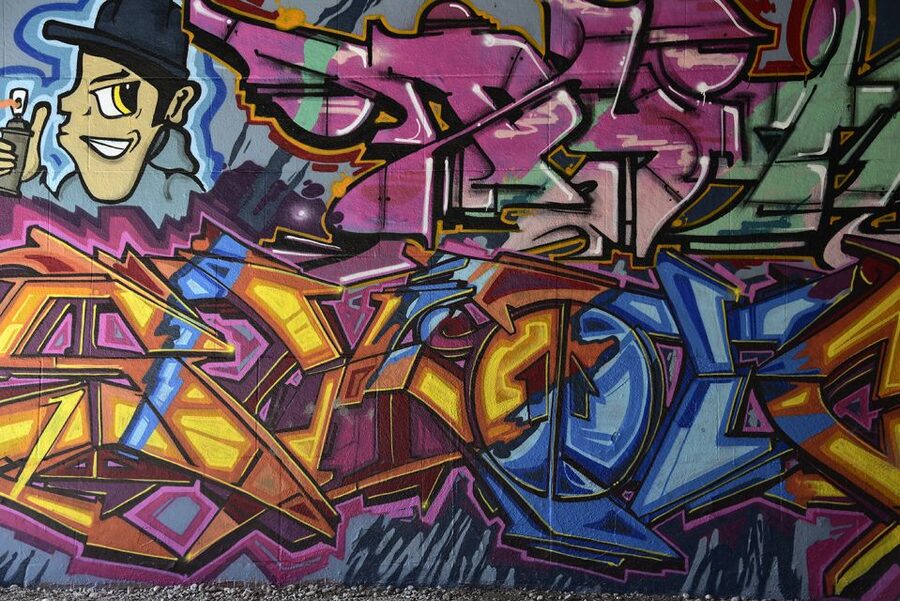
The tour kicks off at Marienplatz, right in front of the Tourist Information Office. Look for your guide holding a yellow sign with red letters—that makes it hard to miss, even if you’re still figuring out where you are in Munich.
From the start, the plan is clear: you’ll be moving. You’ll ride rental bikes with a local guide, and you’ll stop often enough to actually look at the walls, not just zip past them. That balance matters because street art is visual and location-dependent; you need time with each spot.
If you’re the type who likes to get your bearings quickly, this format helps. You’ll see key pieces and learn how to read what you’re looking at. If you hate sitting through lectures, you’ll still get facts, but they come while you’re rolling.
You can also read our reviews of more tours and experiences in Munich.
Munich graffiti’s 1980s roots: why this city gets attention
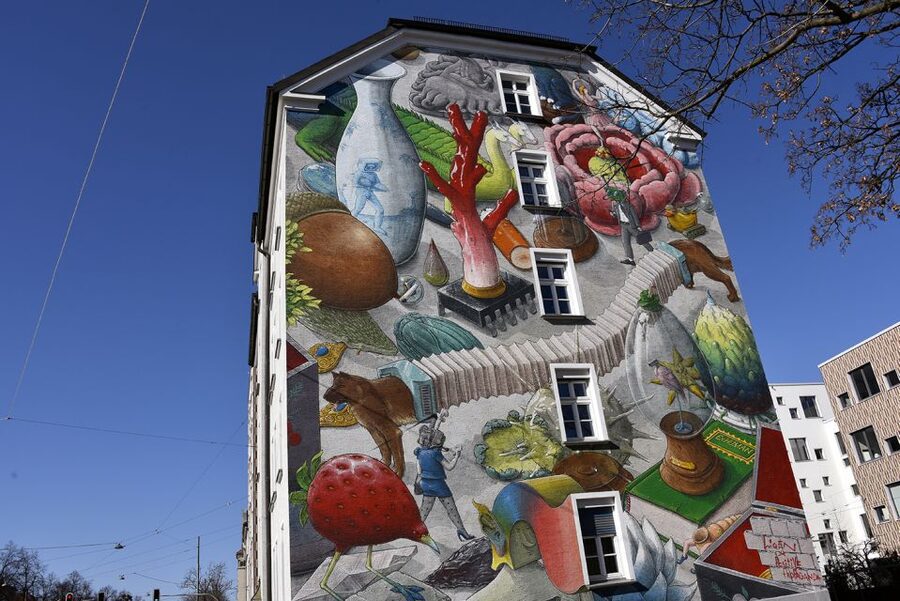
Munich has a reputation that surprises people who only know the city for orderly streets and beer halls. Back in the 1980s, Munich was considered a mecca for graffiti artists in Germany, in the same conversation as New York.
That historical angle isn’t just trivia. It changes how you see what’s on the walls today. When you learn the timeline—how graffiti moved from an underground attitude to a lasting visual language—you start noticing repeated styles, lettering habits, and the way artists respond to their surroundings.
Expect your guide to connect what you see with the evolution of the scene: the older, foundational influences alongside up-and-coming street artists. It’s a good reminder that street art isn’t one moment in time; it’s ongoing.
The Isar river stretch: street art where Munich meets water
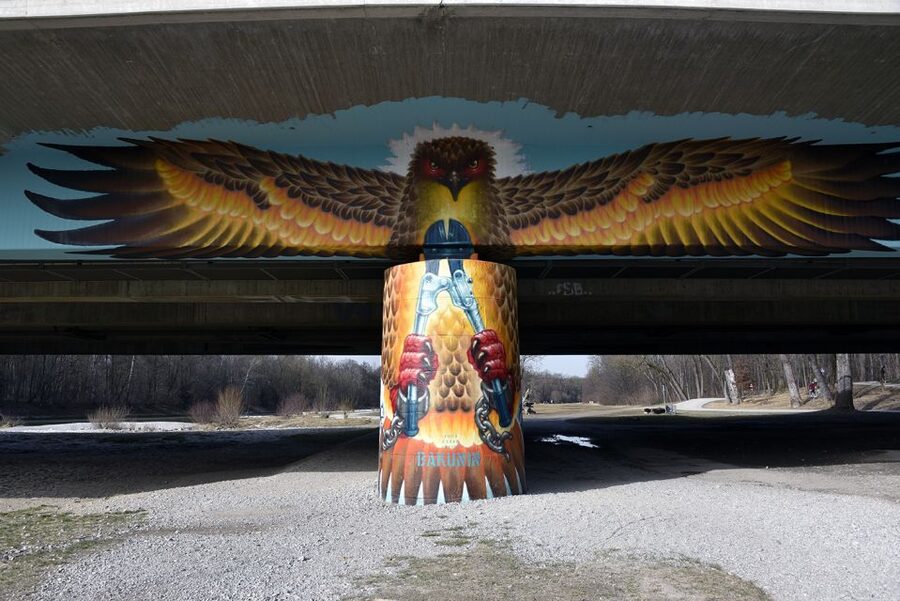
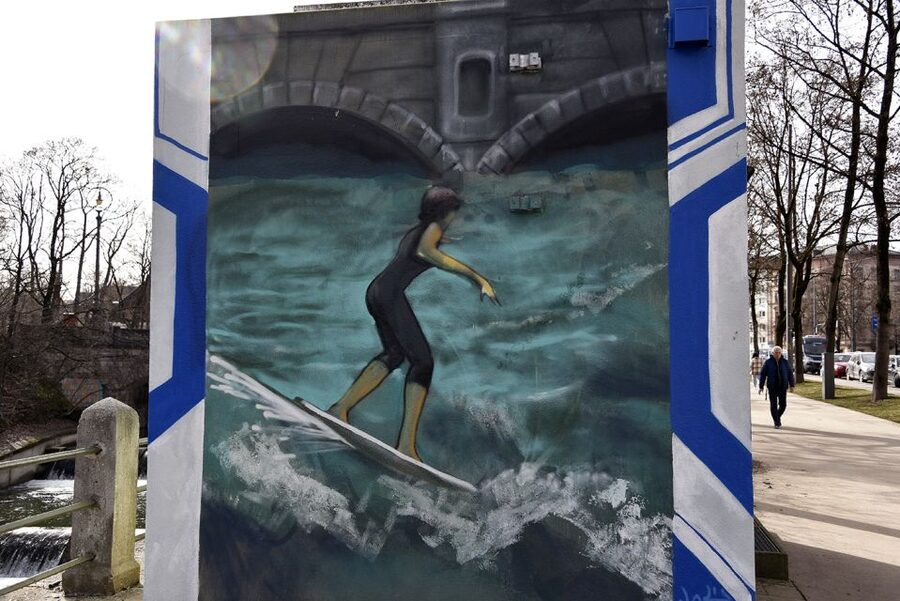
A highlight is the walk/ride along the Isar river, where artists have left their mark over time. Rivers create natural viewing corridors, and the Isar’s paths make it easy to stop and look without feeling like you’re in traffic chaos.
Here’s what I’d focus on while you’re there: scale and positioning. Street artists don’t place work randomly—they pick spots that get passing foot traffic, framing from bridges, and sightlines from both directions. You’ll start seeing how the “message” changes when it’s meant to be read fast versus seen slowly.
If you enjoy photographing texture, this part is strong. You’ll likely find works that look different depending on whether you’re viewing them from the path level or from a short pause above/below. And because it’s outdoors and linear, you get a sense of how street art stitches itself through everyday routes.
Getting off the beaten path: biking into Giesing
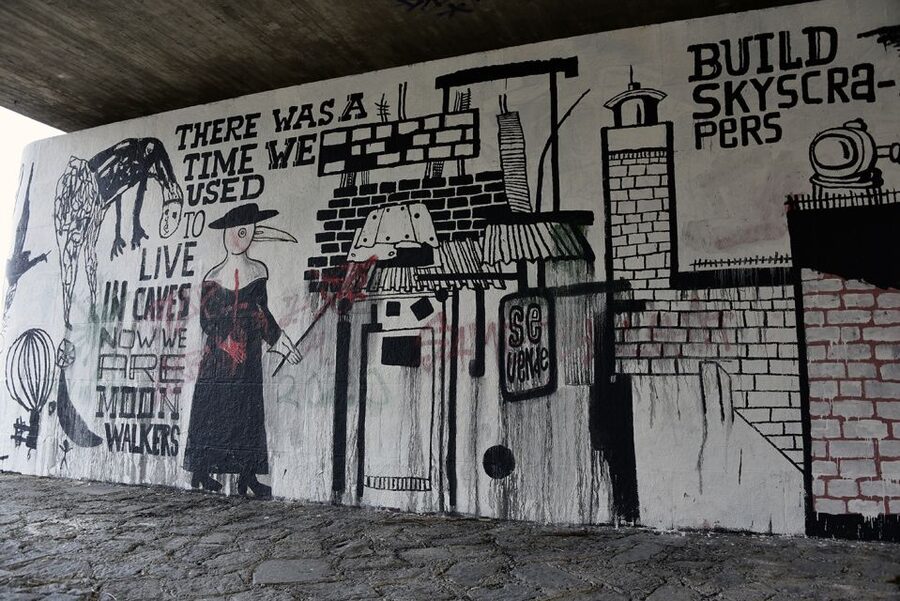
Then you move beyond the usual tourist loops. The route takes you far away from crowds and heads to Giesing, a former working-class neighborhood.
This is where the tour feels more like a real local ride. The walls and streets start to tell different stories once you’re in an area with a different past and a different rhythm of daily life. You’re not just collecting photos; you’re mapping culture onto geography—how place shapes art.
Giesing also makes the tour feel balanced. Munich’s central areas can be very controlled visually. In contrast, you’ll experience more rawness in the urban canvas, and you’ll see street art as something that grew alongside the neighborhood, not something pasted on top of it.
The slaughterhouse district area: art with an edge
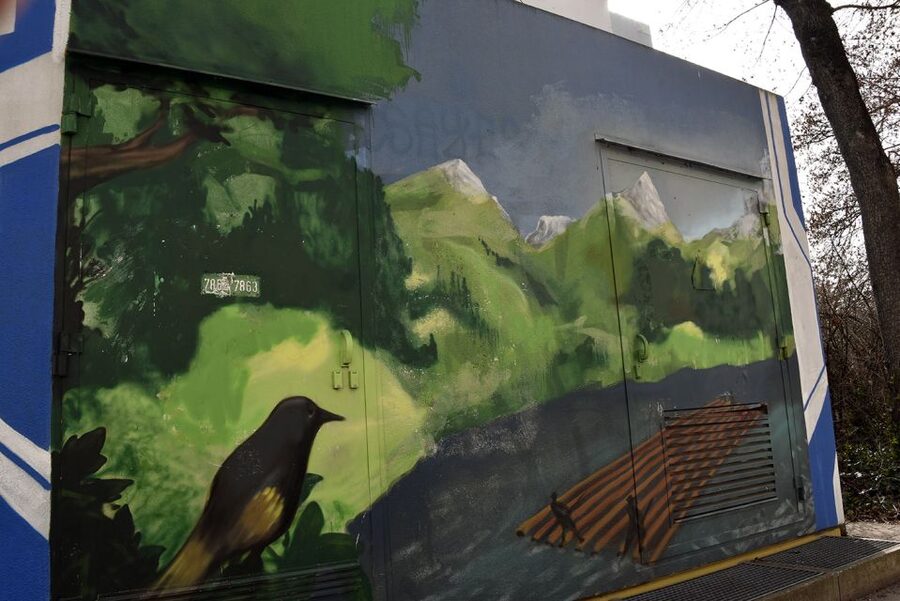
After Giesing, the route continues toward the slaughterhouse district. The name alone hints that this is not the “pretty postcard” part of Munich, and that shift matters.
This segment works because street art often shows up where cities have layers—industrial history, change over time, and neighborhoods that have been redefined. When you’re moving through these zones, you’re more likely to see art that feels connected to the city’s past and present tensions, not only its polished surfaces.
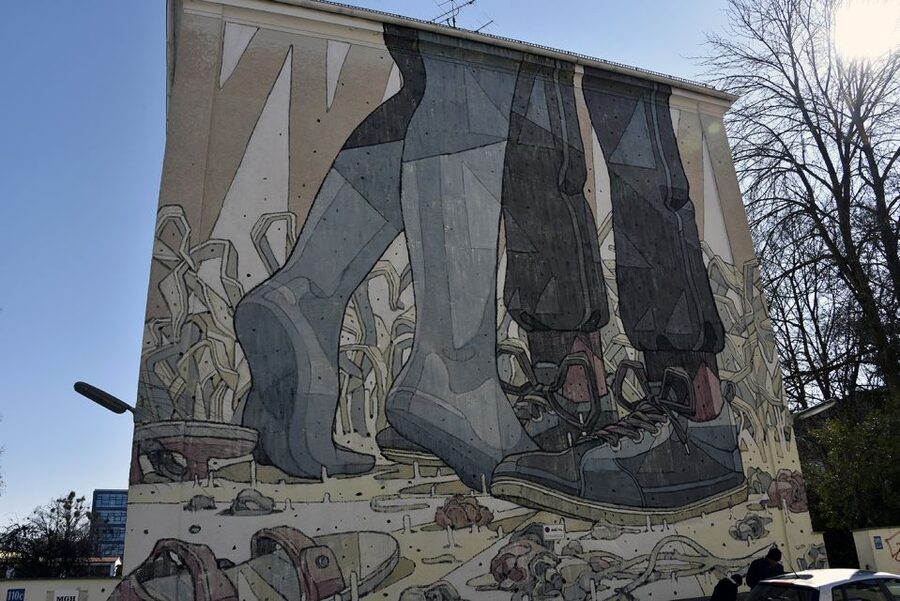
You’ll also keep spotting a mix of works—some credited to well-known street artists and others that represent newer voices. The effect is that you get a timeline you can ride through. It’s not just “cool art.” It’s art as a record of who’s making it and why.
Mid-tour reset: the boat break by the railway bridge
One of the smartest breaks in the whole experience is the pause on a boat at a railway bridge. After cycling and looking up close at walls, you get a change of perspective.
Think of it as a built-in recharge for your brain. You’ll stop straining your eyes, then come back to the street-level details with fresh attention. Also, the scenery from a water-and-bridge angle helps you understand how the art is positioned within the city’s movement patterns.
If you like tours that don’t feel like an endless march, this is the kind of stop that makes the timing feel humane. It breaks the ride into chapters, and that’s a big deal on a 210-minute schedule.
Tour length, pace, and who should go
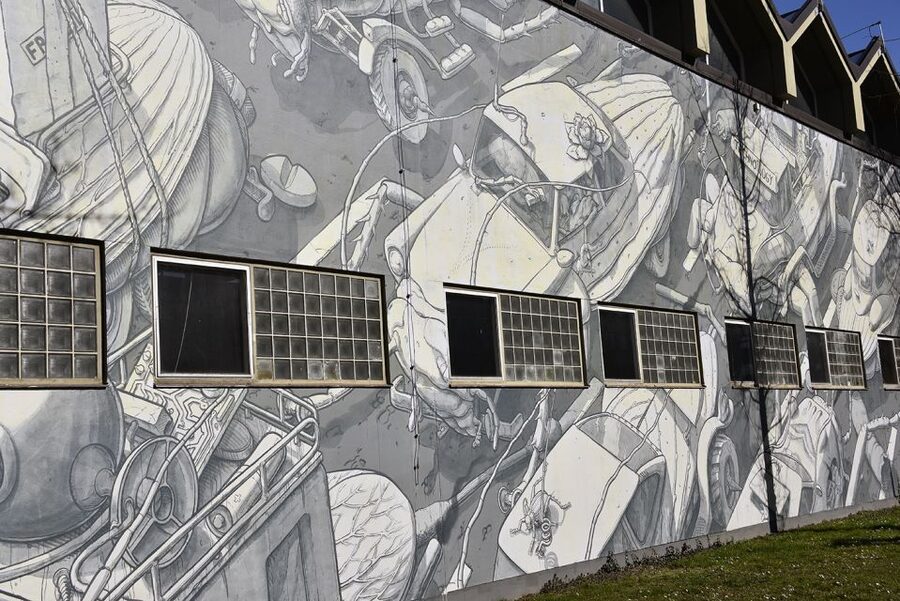
The total duration is 210 minutes (about 3.5 hours). That’s long enough to feel like a proper tour, but short enough that you still have time to explore other parts of Munich after you finish.
The pace is active. You’ll bike and you’ll stroll, with multiple stops for looking and learning. That means the tour is best for adults and older teens who are comfortable riding for a chunk of time.
Age guidance matters here: it’s not suitable for children under 10. Based on real-world experience with similar tours, the length can feel stretched for some kids, so if you’re bringing anyone younger than the middle-school range, plan for patience and frequent encouragement.
Wheelchair users also aren’t accommodated. That’s because the tour is bike-focused and the movement style is built around riding routes and stops, not step-free access.
Price and value: is $40 worth it?
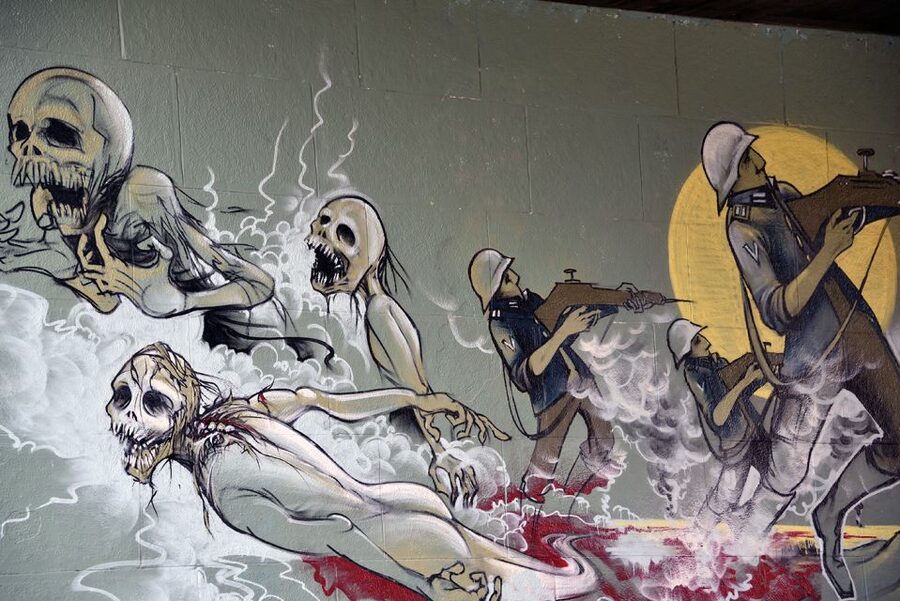
The price is $40 per person, and the value depends on what you want out of the day. You’re paying for three things at once: a live local guide, bike rental, and a route design that takes you from central Munich to areas you’d likely skip on your own.
For street art, the guide is a big deal. Without context, a lot of graffiti becomes just color and letters. With a guide, you get history (Munich’s 1980s role), plus interpretive help that changes how you read style and placement. And because the tour has you riding to different districts, the bike isn’t an add-on—it’s how you reach the good stuff efficiently.
If you’re the type who likes to maximize your time in a city and you’re comfortable riding, this price feels reasonable for a guided, multi-stop experience. If you prefer quiet museums and zero motion, you might feel like you’d get more from a walking-only tour instead.
What’s included: the practical stuff that actually matters
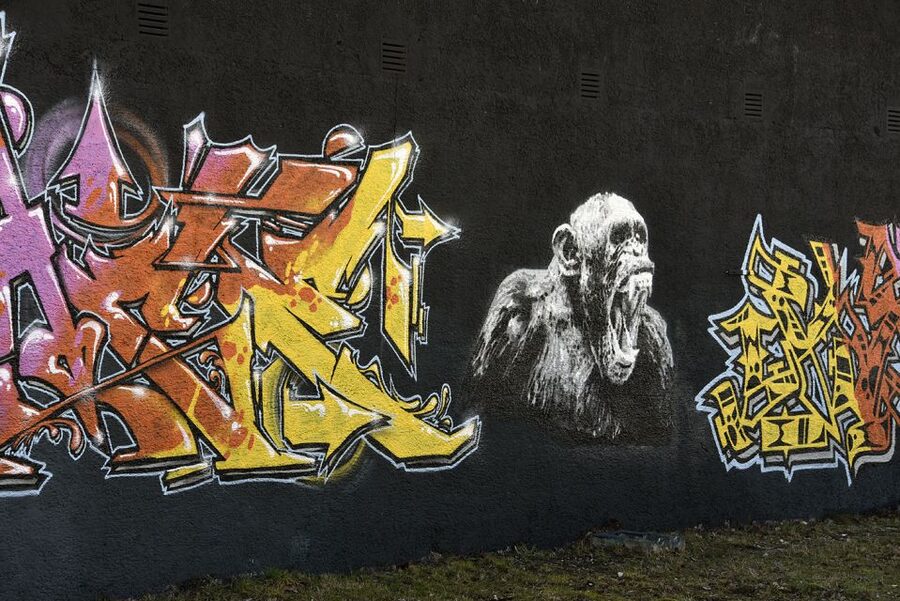
You’re covered with a tour guide and rental bikes. That’s not just convenience—it’s what keeps the tour focused on art rather than logistics.
The tour is led in German by a live guide. That can affect your experience if you don’t speak German. The good news is that street art is visual by nature, so you’ll still get a lot from what you can see, plus the guide’s explanations you can follow with effort.
There’s also a clear rule: no alcohol and no drugs. That’s pretty standard for city tours, and it also keeps the vibe safer and more family-appropriate for people who fit the age range.
Stops you’ll enjoy: how to get more than photos
Street art photography is tempting—you’ll want to capture the colors, the letters, and the big recognizable pieces. Do that, but also take a second look at details: how paint layers sit on texture, how outlines guide the eye, and how some works seem designed for quick recognition from a distance.
A useful trick: when you stop, pick one question to ask yourself. Is the piece aiming for a social message, a style statement, or a visual signature? Then let your guide fill in the missing context, like why Munich became a hotspot in the 1980s or how certain artists helped shape the culture.
You might also get side facts along the way—one guide-led moment I’ve heard described involves a mural tied to a well-known brand ad and the use of special color technology. Whether you catch that exact detail or another similar fact, the point is the guide will often add extra context that turns a simple sight into something you remember.
Should you book this street art bike tour?
Book it if you want street art with context, not just photos. This tour is built for people who like learning while they move: graffiti history, stops along the Isar, and an intentional ride into Giesing and toward the slaughterhouse district.
Skip it if you hate biking, need wheelchair access, or you’re traveling with kids under 10. The tour rules also mean you should keep the day alcohol-free and focused on the art.
If your Munich plan is short and you want one experience that combines local neighborhoods with an alternative look at the city, this is a strong choice.
FAQ
How long is the Munich Street Art Bike Tour?
It lasts 210 minutes (about 3.5 hours).
Where do I meet the guide?
Meet your local guide in front of the Tourist Information Office at Marienplatz. Your guide will be holding a yellow street art tour sign with red letters.
Are bikes included in the price?
Yes. Rental bikes are included, along with a tour guide.
Is the tour in English?
The live tour guide language is German.
Is this tour suitable for kids?
It is not suitable for children under 10.
Is alcohol allowed during the tour?
No. Alcohol and drugs are not allowed.
Is there flexible booking and cancellation?
You can reserve now & pay later, and there is free cancellation up to 24 hours in advance for a full refund.