REVIEW · MOSTAR
Mostar Street Art & Graffiti Tour
Book on Viator →Operated by Touristica - Mostar Tourist Guide · Bookable on Viator
Street art in Mostar tells you the truth. This small-group walk digs into the city’s murals and graffiti with a local artist guide, connecting what you see to what happened before. You’ll visit places like the Hotel Neretva, Fassadenmalerei facades, and Španski trg in a route that feels thoughtful, not random.
What I like most is how the guide treats street art like real storytelling. The long stop on Fassadenmalerei gives you time to actually read the facades, plus personal context about how and why those murals appeared.
One thing to consider: it’s on foot for about 1.5 hours, and there’s no food or drinks included, so plan comfortable shoes and a snack after if you need one.
In This Review
- Key things to know before you go
- Street art in Mostar: more than color on walls
- Price and what you get for $36.01
- Getting oriented: start at Hotel Bristol, end at Španski trg
- Stop 1: Hotel Neretva’s restored beauty and war scars
- Stop 2: Fassadenmalerei and how facades become personal memory
- Stop 3: OKC Abrašević—street art in a living creative space
- Stop 4: Spanish square—stencils, protest energy, and the Spanish Fighters monument
- What it’s really like: how the guide makes the walls talk
- Who should book this Mostar street art and graffiti tour
- Practical details that help you enjoy it
- Should you book? My decision guide
- FAQ
- FAQ
- How long is the Mostar Street Art & Graffiti Tour?
- How much does the tour cost?
- Where does the tour start and end?
- Is the tour on foot, and does it include transportation?
- What language is the tour offered in?
- Can I cancel for free?
Key things to know before you go
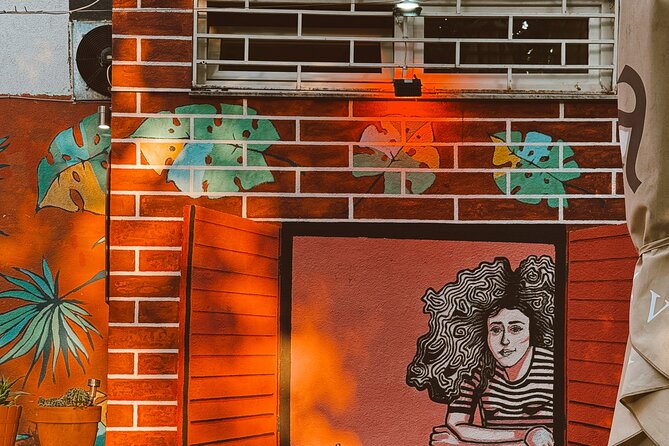
- Local artist-led storytelling ties each mural to art process and regional context
- Fassadenmalerei takes the time with a longer 40-minute stop for close looking
- OKC Abrašević shows street art as a living culture hub, not just decoration
- Spanish square adds layers with stencils, protest energy, and a key monument nearby
- Time for photos and questions keeps it interactive, not just a lecture
Street art in Mostar: more than color on walls
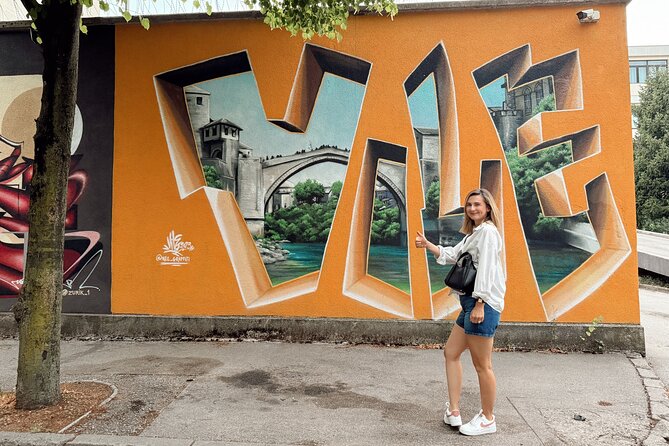
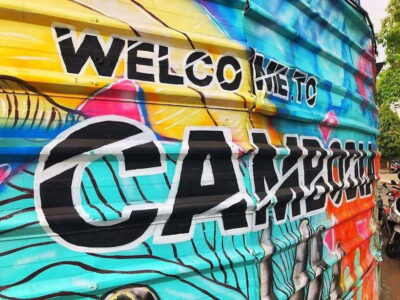
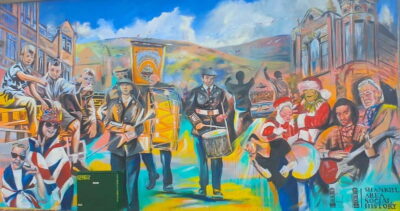
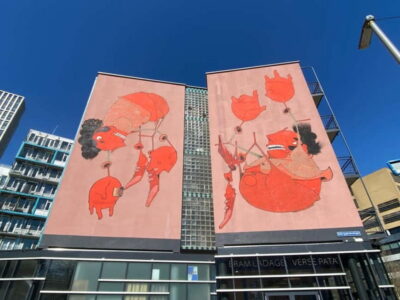
Mostar has a way of turning everyday spaces into history lessons. This tour works because it doesn’t treat graffiti like noise. Instead, it frames murals and stencils as a form of memory and voice—especially in a city shaped by conflict, rebuilding, and constant cultural overlap.
You’ll also notice the balance right away. Some walls look like clean “art moments.” Others look rough and unfinished, like they’re still in conversation with the streets around them. That tension is part of the point. Mostar’s street art isn’t trying to pretend the city is untouched. It’s showing you what people left on the surface while they kept going.
And yes, you’ll get the bonus effect of moving through the city with purpose. Even if you’ve seen Mostar before, this route gives you a different angle on how the place breathes.
Price and what you get for $36.01
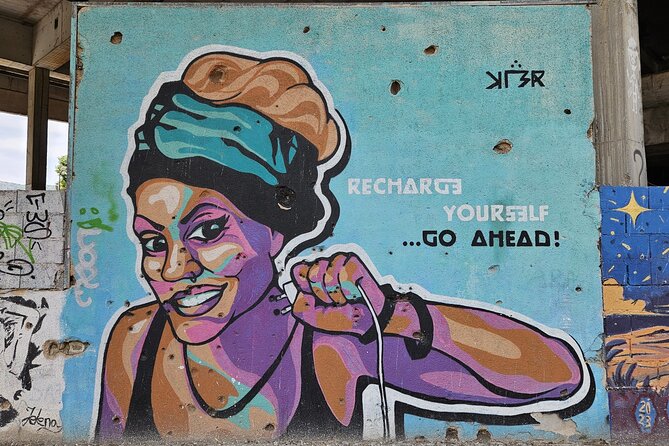
At $36.01 per person for about 1 hour 30 minutes, you’re paying for a guided, art-focused route led by a local artist. For a city break, that’s the sweet spot: enough time to hit multiple stops, but not so long you feel trapped when your feet want a break.
Here’s where the value lands:
- You’re not just walking by murals. You’re getting stories behind the pieces, including context for the region.
- You get time to ask questions and take photos, which matters because street art is the kind of thing you often want to understand up close.
- Admission isn’t part of the cost at the stops—each stop you visit is listed as free admission ticket.
The “watch your budget” part is simple: there’s no food or drinks included, and the tour is on foot. That means you’ll want to pair it with a meal before or after, not during.
Getting oriented: start at Hotel Bristol, end at Španski trg
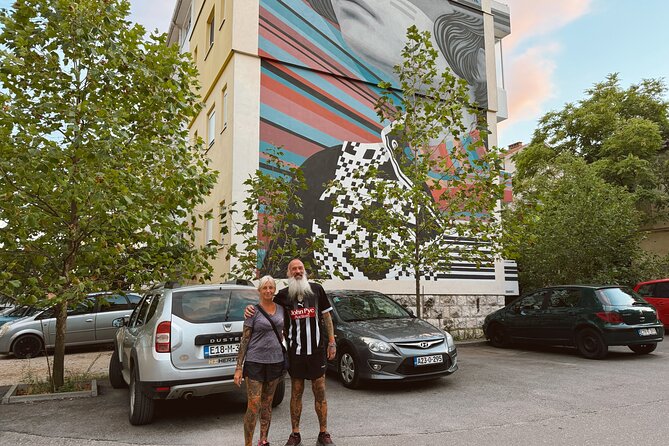
This is a compact, walkable route. You start at Hotel Bristol (Mostarskog bataljona bb) and finish at Španski trg (Spanish square). The tour also runs near public transportation, which is helpful if you’re coming in from somewhere else in town.
Group size is kept intentionally small: the maximum is 8 travelers. That changes the feel. You can actually hear the guide, you can ask questions without shouting, and the stops don’t turn into a rushed “line up and move” situation.
The tour is in English, and you’ll receive confirmation at the time of booking. It’s also listed as suitable for most travelers, and service animals are allowed.
Stop 1: Hotel Neretva’s restored beauty and war scars

Your first stop is Neretva Hotel, a building with a strong visual punch. It’s described as an architectural gem that has been restored to reflect its Austro-Hungarian elegance, after being left in ruins following the war.
The tour’s angle here is smart: you don’t only look at a pretty facade. You get the sense of what the building represented during years of damage—then how it shifted as restoration began. And in the space around it, there’s often raw street art and graffiti, which gives you a “before and after” mood without needing a museum ticket.
Time-wise, it’s a shorter stop—about 10 minutes—so treat it like a warm-up. Use it to get your eye in for what the guide wants you to notice: color choices, placement, layers, and how artists react to a setting that carries weight.
Photo tip: if you’re photographing the building, also try capturing the street-level edges. That’s where the relationship between restoration and street expression often shows up.
Stop 2: Fassadenmalerei and how facades become personal memory
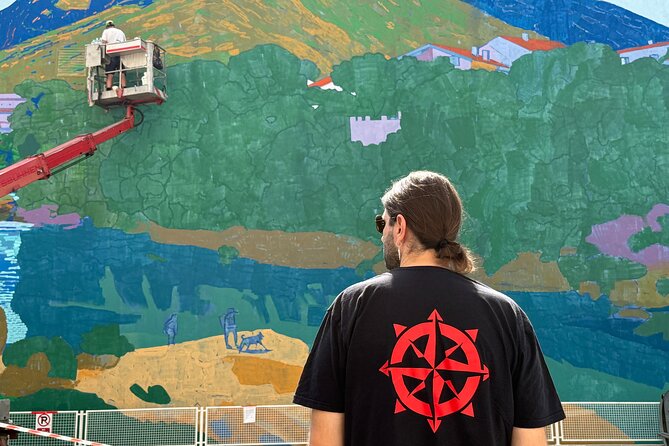
This is the core of the tour. You’ll spend around 40 minutes at Fassadenmalerei, standing in front of facades that turn the city into an open gallery.
The key thing here is the storytelling method. You’ll hear about the artists behind the murals and the creative process. Then you’ll get what makes this stop feel more human than “art history”: personal memories tied to when the murals were being painted and the time spent with the artists during breaks.
That kind of detail changes how you look. Instead of seeing a mural as a finished image, you start to see it as an event. You picture people working, talking, pausing, and making choices while surrounded by everyday life. In a city like Mostar, that matters. Art isn’t just an object—it’s a social act.
Possible drawback: because the session is longer here, you’ll want to stay mentally present. If you only skim, you’ll miss the point. But if you’re the type who likes to stop and really look, this is where the tour rewards you most.
Stop 3: OKC Abrašević—street art in a living creative space
Next comes OKC Abrašević, described as more than a venue. It’s a living cultural hub, with raw urban textures and experimental murals in its orbit.
What I find useful about this stop is that it reframes graffiti from “street decoration” into “community infrastructure.” You’re seeing a place that has long worked as a meeting point for young creatives, activists, and artists—people using public space as a message board, a conversation starter, and sometimes a pressure release valve.
The stop is only about 10 minutes, so don’t expect this to be a deep museum-style detour. Think of it like a signature scene. You’ll pick up the tour’s larger theme: street art as participation, not just display.
If you’re someone who likes to connect art to people, you’ll probably enjoy how this stop ties together the mural stories from earlier with the idea that the culture is still active.
Stop 4: Spanish square—stencils, protest energy, and the Spanish Fighters monument
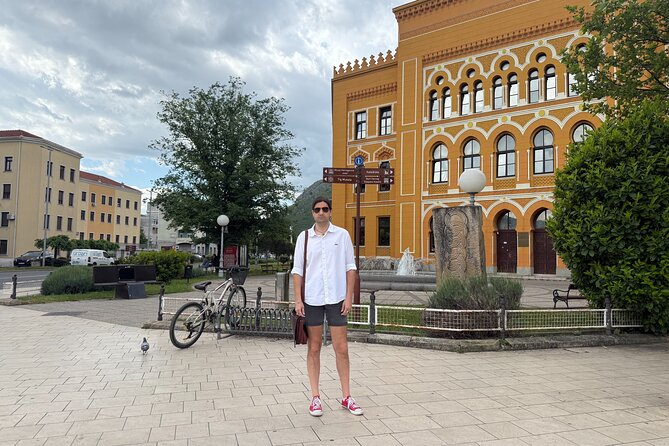
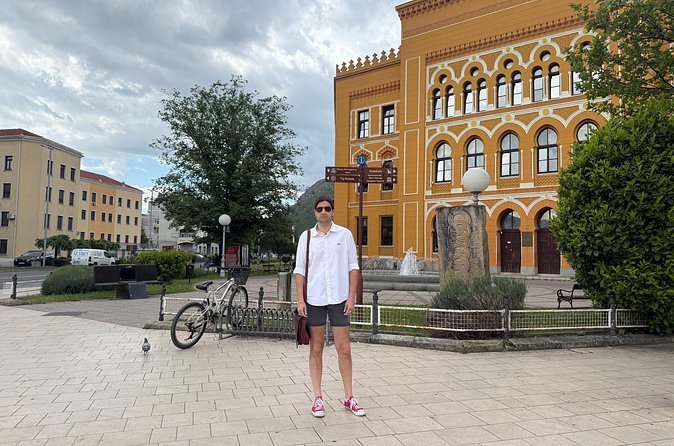
Your final stop lands at Španski trg (Spanish square) for about 30 minutes. This area brings in an extra layer of meaning because the architecture tells one story while the street art tells another.
The surrounding gymnasium is described as reflecting Mostar’s multicultural past, with Austro-Hungarian influence. Nearby, you’ll see graffiti and stencils that show how young artists reclaim public space today. That theme fits Mostar perfectly: spaces can be divided by history, then re-used by culture.
You’ll also hear about the Monument to the Spanish Fighters and how the area evolved—from wartime division toward expression, protest, and quiet reflection.
That mix is where street art becomes more than aesthetics. The murals and stencils aren’t separate from the city’s past. They interact with it, react to it, and sometimes quietly argue with it.
Timing note: since this is the last stop, it’s a good place to ask your remaining questions. You’ll be near the tour’s end point, so it’s also an easy spot to transition into more exploring on your own afterward.
What it’s really like: how the guide makes the walls talk
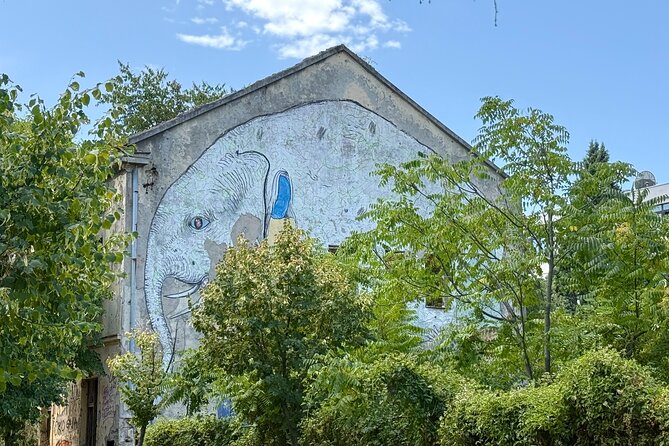
The strongest praise centers on one thing: the guide isn’t only talking about the art—they’re connecting it to wider regional context and to what the city has been through. That’s why people finish feeling like they understand not just the images, but the mind behind them.
In practical terms, here’s what you should look for during your walk:
- Listen for the reason a piece was made, not only what it looks like.
- Watch how murals are placed—at eye level, tucked beside architecture, or layered over older textures.
- Pay attention to the artists’ process details. Even a small mention about how they worked during breaks can make the whole work feel more real.
- Use the photo time actively. If you’re taking pictures, also pause long enough to compare what you see in real life versus what’s easiest to capture.
If you’re the type who loves history but hates dry lectures, this tour leans toward story and scene-setting. It keeps moving, but it slows down at the meaningful spots.
Who should book this Mostar street art and graffiti tour
This tour fits best if you:
- Want a Mostar experience beyond the old-town checklist
- Enjoy murals, street art, or political art as a window into real life
- Like small groups and interactive guides (max 8 travelers)
- Have limited time and want to squeeze in cultural insight fast, without getting overwhelmed
It’s also a smart pick if you’re doing a short visit—people often book when they’re in town for only a day or two, because it gives a distinct perspective that’s different from standard sightseeing.
If you’re looking for a long, in-depth art workshop, this is not that. It’s a guided walk with storytelling stops. You’ll leave with context, but you won’t be sitting in one place for hours.
And if you’re someone who needs frequent breaks, the itinerary is compact and walk-based, so you might want to manage your expectations and wear shoes you trust.
Practical details that help you enjoy it
A few small things make a big difference with this kind of tour:
- Wear comfortable walking shoes. The entire route is on foot, and you’ll spend meaningful time standing at facades.
- Bring a phone for photos. You’ll have built-in photo time and you’ll want to capture details.
- Plan for time around food. Since food and drinks aren’t included, do a quick snack strategy before or after.
- Expect English guidance and a mobile ticket. That keeps it simple when you meet up.
- If you’re traveling with a service animal, you can bring it along—this is explicitly allowed.
Should you book? My decision guide
Book this tour if you want Mostar through the lens of people and stories. The strongest reason is the way the guide connects each mural or graffiti area to meaning—process, memory, and regional context—without turning the experience into a textbook.
I’d also book it if you like making sense of what you see. This tour is built for active looking: you get time at the best stops, plus chances to ask questions.
Skip it only if your ideal day in Mostar is totally about architecture and monuments with zero focus on street art culture. In that case, you may feel like you’re spending time on walls rather than views.
FAQ
FAQ
How long is the Mostar Street Art & Graffiti Tour?
It lasts about 1 hour 30 minutes.
How much does the tour cost?
The price is $36.01 per person.
Where does the tour start and end?
The tour starts at Hotel Bristol and ends at Španski trg (Spanish square).
Is the tour on foot, and does it include transportation?
Yes, the tour is fully on foot, and transportation is not included.
What language is the tour offered in?
The tour is offered in English.
Can I cancel for free?
Yes. You can cancel up to 24 hours in advance for a full refund.