REVIEW · LIMA
Colorful Barranco Tour and Street Art
Book on Viator →Operated by Lima Experience · Bookable on Viator
Barranco has a way of sticking in your memory. This 2-hour walking tour focuses on street art, murals, and the neighborhood stories behind them, with a bilingual guide. I like that it keeps moving from stop to stop instead of turning into one long lecture.
Two things I really like: you get a guided explanation of why the graffiti and symbols matter, and you finish at the famous Puente de los Suspiros area for great photo time. One drawback to plan for: it’s a walking tour with steps and uneven streets, so it’s not a good fit for wheelchairs or baby strollers.
In This Review
- Key Highlights You Should Know
- Barranco Street Art in Two Hours: What You Actually See
- Price and Value: Where Your $20 Actually Goes
- Meeting at Starbucks: Easy to Find, But Be Ready to Walk
- Stop 1: Barranco Photos Plus the Story Behind the Walls
- Stop 2: Parque Municipal de Barranco and the Creative Neighborhood Vibe
- Stop 3: 28 de Julio Avenue and the Meaning of the Graffiti
- Stop 4: Bajada de los Banos, the Hermitage, and the Bridge Approach
- Stop 5: Puente de los Suspiros and the Green-Coast View
- Who This Tour Fits Best (And Who Should Skip It)
- Guides You Might Meet: Names That Show Up Often
- Pacing, Photos, and How to Get More Out of 2 Hours
- Should You Book This Barranco Colorful Tour and Street Art Walk?
Key Highlights You Should Know
Small group size (max 15) keeps the walk feeling personal.
Bilingual guiding (English and Spanish) helps if you’re comfortable in either language.
Free stops listed across the route means you’re paying mostly for the guide time.
Photo-friendly pace with time built in for stops and pictures.
Puente de los Suspiros by the end for a romantic, iconic Lima moment.
Barranco Street Art in Two Hours: What You Actually See
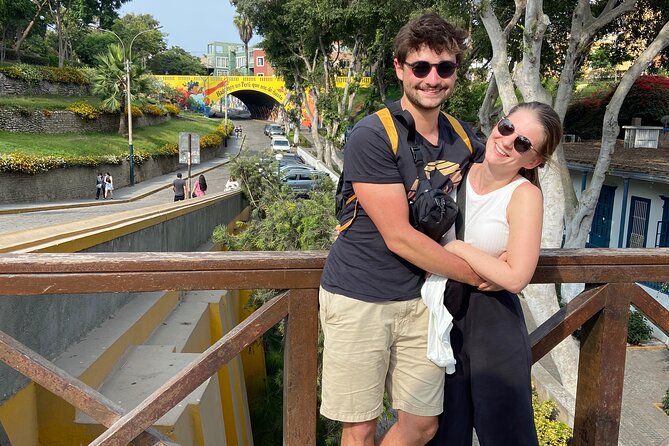
This is a straightforward, walking-focused way to understand Barranco without needing museum tickets or a full day. You’re in the neighborhood’s creative zone, moving street by street, where murals and graffiti are treated like public storytelling instead of random decoration.
The format is simple: your guide points out what to look at, explains the meanings, and ties the art back to the district’s identity. That matters, because street art can look like pure style until someone connects it to local culture, artists, and themes. In this case, you’re hearing how people read signs, symbols, and themes across Barranco’s walls.
It also helps that the tour is short: about 2 hours. You get a solid taste of the area, then you’re free to keep exploring on your own afterward.
You can also read our reviews of more tours and experiences in Lima.

Price and Value: Where Your $20 Actually Goes
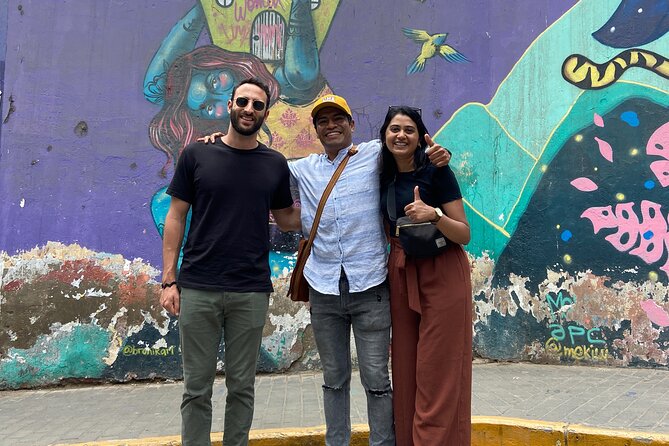
At $20 per person for a roughly 2-hour guided walk, the math is mostly about time with a guide, not admissions or transportation. The stops listed show free admission tickets, and the itinerary is built around viewing public art and walking through key areas of Barranco.
You don’t get snacks or private transport included, so plan for that like you would for any neighborhood walk. But you also avoid common budget traps: you’re not paying extra just to stand in front of a mural.
One more value point: the tour caps at 15 travelers. That usually means fewer people to compete with for the guide’s attention when you’re asking what a specific symbol means.
Meeting at Starbucks: Easy to Find, But Be Ready to Walk
The meeting point is Av. Pedro de Osma 102, Barranco 15063, at Starbucks. The tour starts at 10:00 am and ends back at the same meeting point.
Here’s the practical part: there’s no grace period mentioned in the experience info, and at least one review called out that the guide starts at the scheduled time. So I’d treat this as a true appointment. Get there early, not because you’ll be rewarded with extra time, but because it prevents stress and awkward solo wandering.
One nice touch is communication. Reviews mention the company sharing info before the tour and even using methods like live location sharing when someone was running late. Still, your best move is simple: show up on time and you’ll start smoothly.
Stop 1: Barranco Photos Plus the Story Behind the Walls
Your first stop is Barranco itself, with 10 minutes for orientation, photos, and context. This is where the guide sets the frame: what you’re seeing around you in Barranco, and why these walls became a canvas for local identity.
You’ll take photos at one of the key Barranco spots, then get an explanation of the neighborhood’s history through its street art—including graffiti and murals. Even if you’ve seen murals before, I like this kind of start because it gives you a mental checklist. Once you know what the guide will be explaining later (symbols, themes, cultural references), the whole walk gets easier to follow.
A small consideration: depending on which murals are being discussed that day, some artwork can be older and may look faded or need refreshing. Don’t let that ruin the tour. Older art still tells you what people cared about at the time.
Stop 2: Parque Municipal de Barranco and the Creative Neighborhood Vibe
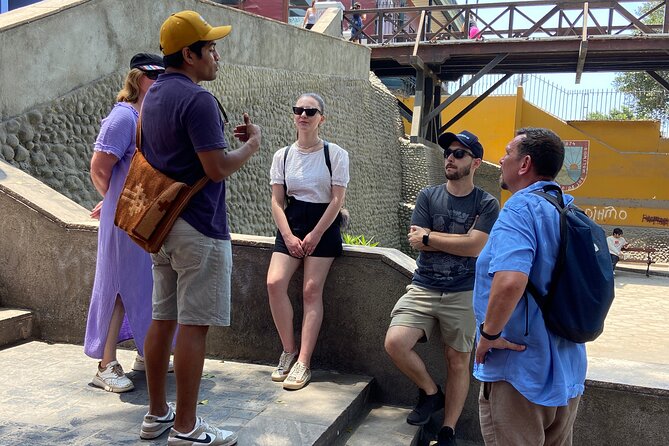
Next you walk to Parque Municipal de Barranco for about 30 minutes. This is more than a park stop. It’s part of the “how Barranco became Barranco” explanation.
Barranco is often described as the city’s most bohemian district, and here you’re told it’s tied to the home and workplace of Peru’s leading artists, musicians, designers, and photographers. That context is useful because it explains why street art fits the neighborhood. It’s not random; it’s part of a longer pattern of people creating in public view.
If you care about culture, this stop helps you shift from seeing art as images to seeing art as community expression. And it’s also a practical break in the middle of the walk so you can look around and reset your photos.
Stop 3: 28 de Julio Avenue and the Meaning of the Graffiti
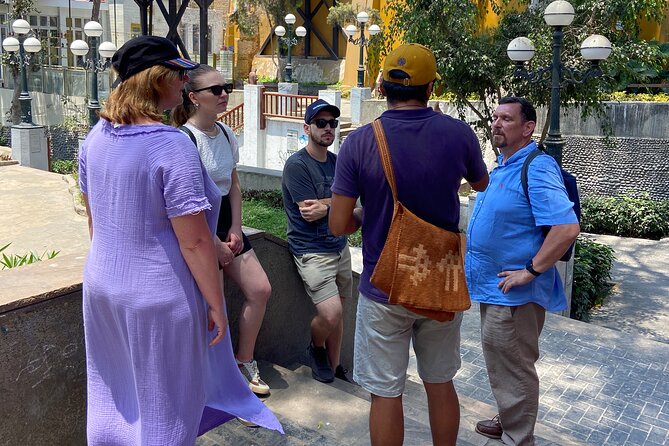
Then you focus on a specific theme: the meaning of graffiti on 28 de Julio Avenue. The stop is around 20 minutes, which is a good time window—enough for explanation, short enough to keep the momentum.
This part is where the tour leans into interpretation. You’ll hear about Chicha art, local symbolism, and the way Barranco’s walls connect to themes like magic and the neighborhood’s “Fish-Map” references.
Why that matters: street art is easy to enjoy at face value, but it’s even better when you learn how locals read it. You start looking for repeat symbols, visual patterns, and how artists build meaning through style. By this point, you should feel like you’re not just taking pictures—you’re understanding what you’re photographing.
Stop 4: Bajada de los Banos, the Hermitage, and the Bridge Approach
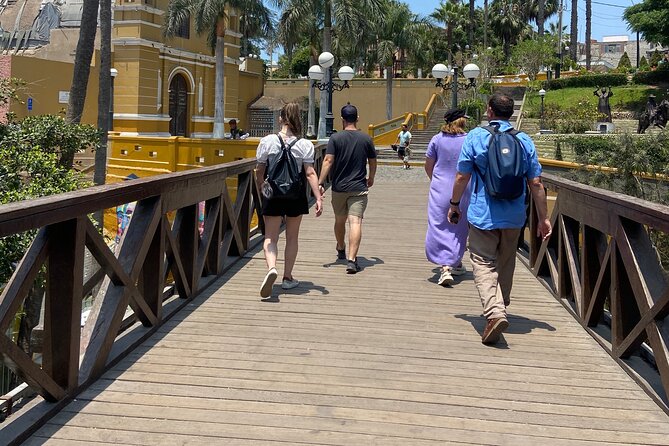
After the 28 de Julio theme, you move toward Bajada de los Baños for about 30 minutes. This is a walking stretch that brings you through landmarks along the way, including the Hermitage and the Bridge of Sighs area.
This is where the tour feels more like a neighborhood walk than a gallery. You’ll experience the actual Barranco angles and elevations, and you’ll likely get views that make you stop and look even when you’re not sure what you’re looking at.
There’s also a practical note from reviews: the area can have a strong smell from pigeon droppings. That doesn’t change the quality of the art, but it’s good to know so you can manage expectations, cover up if you need to, and keep your focus on the route.
Stop 5: Puente de los Suspiros and the Green-Coast View
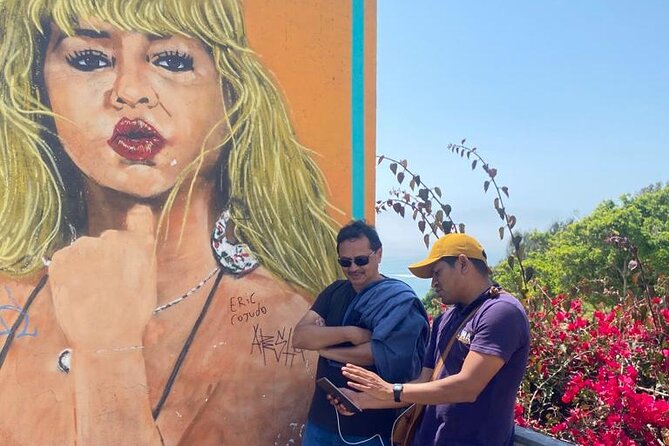
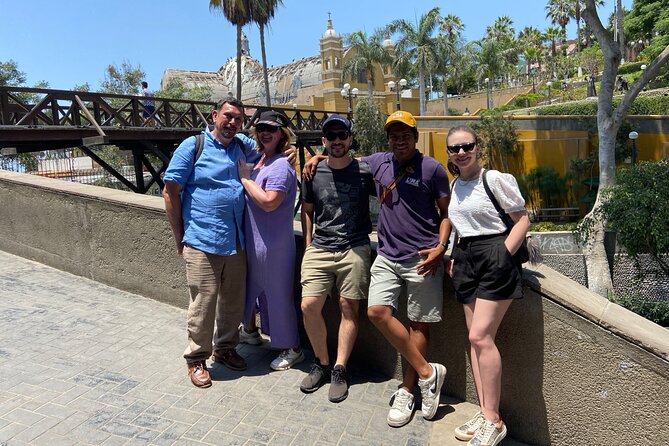
The final stop is Puente de los Suspiros, also called the Bridge of Sighs. You cross it and you’re given about 20 minutes here.
The guide will talk about why the bridge is romantic: it’s described as a traditional wooden bridge and a place associated with love affairs in Lima. Even if you’re not playing along with the legend, the bridge is still a strong photo moment because of the setting and the way the walkway frames the scene.
You also end up with an eye on the surroundings. The area is described as ending on the beach or with a great view of the green coast—or both. That’s a big reason this tour is worth doing late morning: you’re walking to a viewpoint instead of simply circling more murals.
From there, you head back to the meeting point, so you don’t have to figure out transportation or route logistics after your guided time is done.
Who This Tour Fits Best (And Who Should Skip It)
This is a good fit if you like:
- Street art as storytelling, not just as decoration
- A guided explanation that connects symbols to local culture
- A short walk that still gives you direction for your next day in Lima
It may be less ideal if:
- You need wheelchair access. The experience explicitly says it’s not apt for people in wheelchairs
- You’re traveling with a baby stroller. It’s also stated as not suitable due to route conditions and safety
One more reality check: it’s a walking tour, so bring shoes that handle uneven streets and steps. Reviews mention steps up and down, so your comfort depends on your ability to move comfortably.
Guides You Might Meet: Names That Show Up Often
I can’t promise who leads your exact tour, but the people praised in the experience data include Gustavo, Yelsin (listed as Jhon Yelsin in one note), Edwin, and Giovana/Gia. The common thread is clear: these guides are described as patient, fluent, and willing to pause for questions and photos.
If you’re asking what symbols mean, you’ll want a guide who can explain without rushing you. That’s exactly what comes through in the feedback, including comments about excellent English and time spent taking pictures.
Pacing, Photos, and How to Get More Out of 2 Hours
To make the most of it, I’d treat the tour like a photo + meaning combo:
- Come ready to stop for pictures without rushing your guide
- Ask questions when something catches your eye, especially during the 28 de Julio Avenue interpretation portion
- Use the bridge stop as your “final photo round,” because you’ll have both romantic scenery and coastal views nearby
Also, arrive early and be on time. The experience info points to tight start times, and one review specifically flagged a lack of flexibility if you’re late.
Finally, don’t worry if some murals look older. A faded wall can still be part of the story. The tour’s value is in the explanations and the cultural connections, not perfect new paint.
Should You Book This Barranco Colorful Tour and Street Art Walk?
Book it if you want a low-cost, high-reward way to understand Barranco in a short time. At $20 for about 2 hours with a bilingual guide and free viewing stops, it’s a solid first activity in Lima if you care about art, symbols, and neighborhood culture.
Skip it if you can’t comfortably handle steps and uneven pavement, since it’s not positioned for wheelchair or stroller use. And if you hate punctual tours where the group starts on time, plan extra buffer so you’re not late and stuck trying to catch up.
If you like street art with context—and you want to end at one of Barranco’s most famous bridge viewpoints—this one is easy to recommend.